



What to Do When You Feel a Migraine Attack Starting
If you get stressed and upset when you feel a migraine attack starting, you're not alone. Many people fear migraine attacks, as it signifies the start of unpleasant symptoms that can last hours and even days. That's why it's vital to learn the early symptoms of a migraine attack so you can take steps to reduce the pain.
People experience migraine differently, so your attack signs may differ from someone else's. However, it's helpful to know the most common symptoms of a migraine starting. Learn what these are and how to stop a migraine before it starts, or at least make it less painful.
Recognizing the early signs of a migraine attack
Migraine attacks happen in stages, called prodrome, aura, headache and postdrome. Review the symptoms for the first two stages below. You may not experience all the stages, so you’ll have to monitor your symptoms to determine what to look out for.
Prodrome symptoms
Most people experience the prodrome phase. Prodrome is the first stage of a migraine attack, and it usually happens a few hours or days before a migraine headache starts. You may experience the following symptoms:
- Mood changes
- Fatigue or tiredness
- Bostezos frecuentes
- Trouble focusing
- Neck and shoulder stiffness
- Sensitivity to light or sound
- Náuseas
- Hunger or food cravings
- Constipation or diarrhea
- Increased urination
Aura symptoms
About 25% of people with migraine also experience a phase called aura before their migraine headache starts. Aura refers to sensory disturbances lasting a few minutes to over an hour. They can be any of the following:
- Visual: Visual aura is the most common type of migraine aura. It includes temporary visual disturbances like flashing lights, bright spots, zigzag lines, blurred vision and blind spots.
- Sensory: You may also experience sensory and motor disturbances during the aura phase. For example, many people feel numbness or tingling in their hands, arms and face. You might also feel dizzy or have weak muscles.
- Dysphasic: A less common migraine aura symptom is verbal or language issues like mumbling or slurred speech.
Try CEFALY for Migraine Relief
Immediate steps to take
As soon as you notice one of your migraine symptoms, take action immediately. The following advice may help you prevent or mitigate migraine pain during an attack.
1. Take your medication
If your doctor has prescribed abortive medication as part of your migraine management plan, now's the time to take it. Various medications for migraine exist, including over-the-counter pain relievers and anti-nausea medicines. There are also prescription medicines like triptans, nonsteroidal anti-inflammatory drugs (NSAIDs), ergot alkaloids and CGRP antagonists.
Taking your first dose as soon as symptoms start is often the best approach for combating pain. Medication takes time to work and may not be as effective if your pain has already begun. Your doctor will tell you when and how to take your prescribed medication, and it’s best to follow their advice.
2. Go to a dark, quiet room
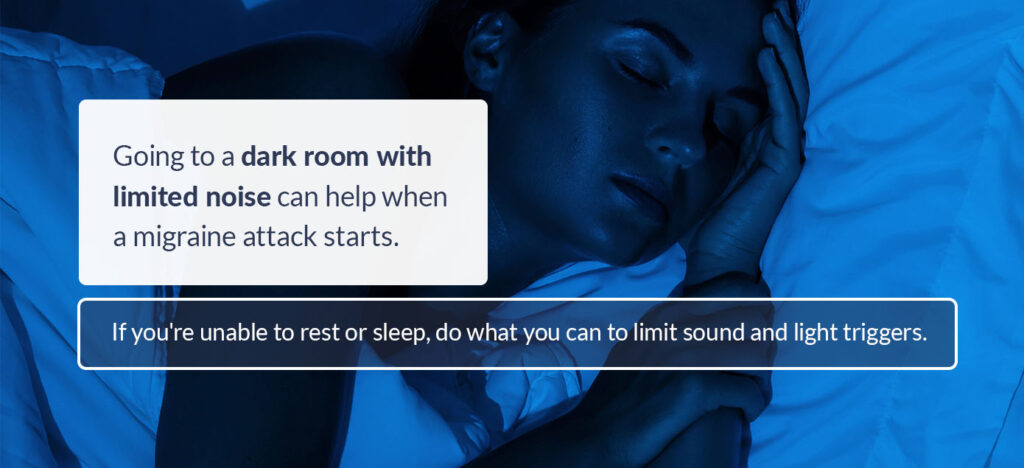
While not always possible, going to a dark room with limited noise can help when a migraine attack starts. Migraine can make you sensitive to sound and light. Lie down and try to rest, as sleep could help stop your attack.
If you’re unable to rest or sleep, do what you can to limit sound and light triggers. If the light is an issue for you, try migraine glasses that filter out specific light wavelengths known to worsen migraine attacks. For sound, you could wear noise-canceling headphones or earplugs to block out the noise.
3. Use the CEFALY device
CEFALY is an FDA-cleared migraine device with treatment modes to help prevent and relieve migraine attacks. When you feel an attack coming, attach the device to your forehead using the reusable adhesive electrode. Next, turn on the ACUTE treatment mode and use the device for 60 minutes. Around 63% of CEFALY users in one study said just one hour of ACUTE treatment reduces their pain by half or more.
The device works by sending gentle, low-voltage electrical impulses to the trigeminal nerve, the primary pathway for migraine pain. These impulses disrupt pain signals in the trigeminal nerve. The best part is that CEFALY has no serious side effects, and you don’t need a prescription.




4. Relax your mind and body
Stress can also trigger and worsen migraine attacks. If you feel yourself becoming stressed after experiencing a migraine symptom, try to calm yourself down. That’s easier said than done, but there are a few strategies you can use to relax. A popular method is to sit in a quiet room and practice meditating. It’s as simple as closing your eyes, breathing deeply and focusing on each breath. Gentle stretching and yoga can help, too.
5. Apply a hot or cold pack
Temperature therapy is an easy treatment option that can ease migraine pain. Buy a hot or cold compress and apply it to your head, shoulders or neck at the first signs of an attack. You may need to experiment to see whether heat or ice improves your symptoms. Sometimes, a combination of hot and cold packs could help, such as a cold pack on your neck and a heating pad on your feet.
You can also take a hot or cold shower at the start of a migraine attack and then rest. For those days when you’re out and about, pack an ice roller or cold compress with you for quick relief. If you don’t have a cold compress, grab a bag of frozen vegetables and wrap them in a towel.
6. Drink and eat something
If you feel an attack starting, it's best to avoid your triggers as much as possible, and dehydration and skipped meals are common migraine triggers. Fill up your water bottle and take frequent sips to stay hydrated.
Eating a small, healthy meal or snack could also help, as migraine attacks can worsen from low blood glucose levels. Just be careful about what you eat, as certain foods could exacerbate your migraine pain. A few examples of migraine food triggers are chocolate, citrus fruit, baked goods, cured meats and aged cheeses.
If you’re not sure what triggers your migraine, start a migraine diary. Anytime you have a migraine attack, write down your symptoms and anything you think could have caused the attack. You can also note what treatment options you tried and if they worked. For convenient trigger tracking, try the CeCe Migraine Management app. It allows you to log migraine attacks quickly and discover patterns and trends.
Be prepared for migraine attacks with CEFALY
A migraine attack can start anytime, so it's important to know what your triggers are and have treatment options on hand. CEFALY is a fantastic migraine treatment option because you can take it with you and use it anywhere. Along with the pain-relieving ACUTE mode, the device has a PREVENT mode you can use daily to reduce attack frequency.
Don’t wait until you’re in pain — buy a CEFALY device today with a 90-day money-back guarantee!





Últimas publicaciones

La guía esencial de dispositivos médicos para la migraña
CEFALY is an FDA-cleared medical device that targets the main pathway for migraine pain: the trigeminal nerve (the…

“CEFALY Gave Me My Life Back”: Camille’s Search for a Drug-Free Migraine Treatment
I've lived with migraine since my second pregnancy with my daughter. That pregnancy marked the beginning of my…

What Patients Need to Know About Episodic Migraine vs. Chronic Migraine
While official definitions classify episodic migraine as fewer than 15 headache days per month and chronic migraine as…