



How to Manage Light Sensitivity With Migraine Headaches
- Relationship between photophobia and migraine
- How to manage light sensitivity from migraine
- Light sensitivity and migraine FAQs
Along with a throbbing headache, light sensitivity is the most common migraine symptom. Some people even experience light sensitivity during "silent" migraine episodes without a headache. The combination of light sensitivity and a migraine headache can disrupt your life for hours or even days.
The key to managing light sensitivity from migraine is starting with the right information. If you experience migraine episodes with light sensitivity, this guide could help you find relief.
The relationship between photophobia and migraine
Light sensitivity — or photophobia — can stem from several causes, including:
- Migraña
- Blepharospasm (a disorder causing frequent blinking)
- Dry eyes
- Cluster headaches
- Tension headaches
- Meningitis
- Brain injury
- Pituitary tumors
- Corneal abrasions
- Medicine side effects
Among these, migraine is the most common cause of photophobia. One can have a migraine episode without photophobia or light sensitivity without a migraine headache. However, photophobia is a symptom for 85%-90% of people with migraine. People with migraine are also more vulnerable to light sensitivity between episodes. For these reasons, doctors consider whether patients experience photophobia when diagnosing migraine.
Exposure to harsh light is a commonly reported migraine trigger. Fluorescent, flashing or blue light from screens may be particularly triggering. On the other hand, researchers note that photophobia as a migraine symptom can start earlier than the headache in some migraine attacks. This may lead some people to report light triggering their attack when light sensitivity is actually an early symptom.
Even if some reports of light triggering migraine are misattributions, we know that light can intensify the headache. People with migraine often feel the need to close their eyes or move to a dark space to alleviate their symptoms.




How to manage light sensitivity from migraine
If you experience migraine photophobia, the best way to manage it is to tackle the underlying cause.
1. Avoid triggers
Getting to know your migraine triggers can help reduce your migraine frequency and severity. If a migraine attack with light sensitivity hits, moving to a darker space and avoiding screens could bring some immediate relief. However, avoiding harsh light and other triggers can also help prevent migraine episodes with photophobia in the first place. Besides light, the most common migraine triggers include:
- Mental or emotional stress
- Hormonal changes
- Sleep schedule disruptions
- Foods like mature cheeses and chocolate
- Excessive caffeine intake
- Overexertion
- Deshidratación
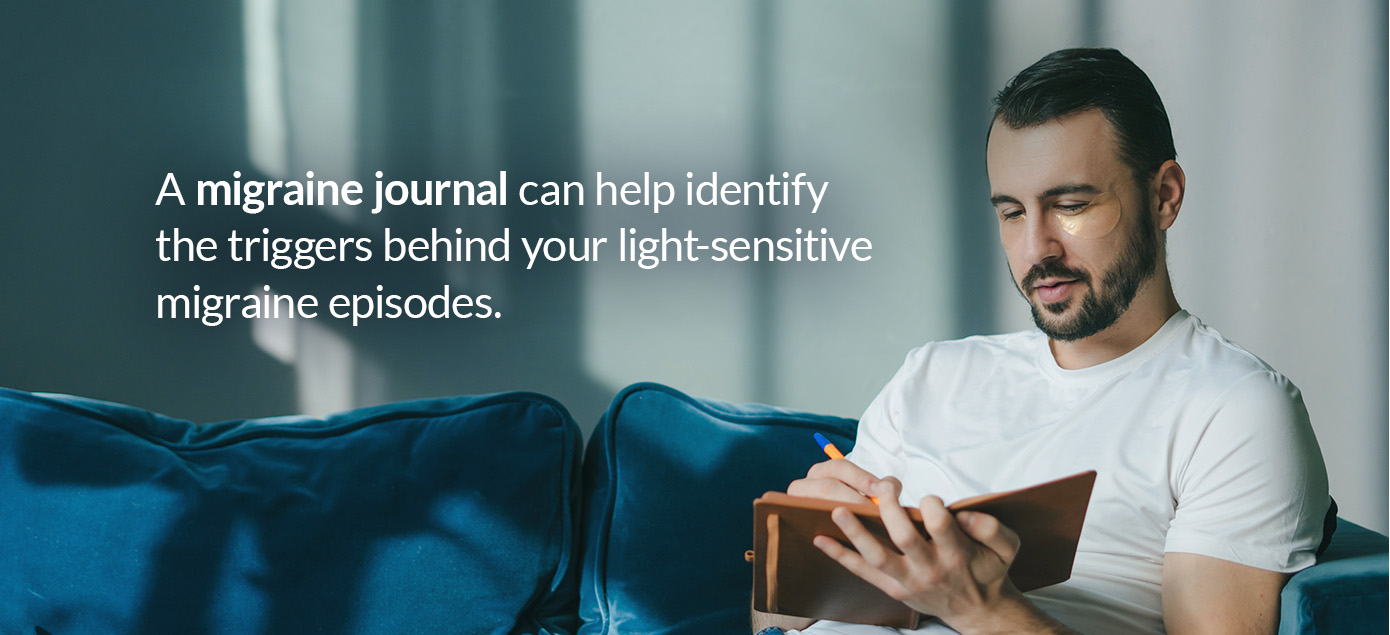
A migraine journal can help identify the triggers behind your light-sensitive migraine episodes. Then, you can plan to manage or avoid them.
2. Adapt your lifestyle
Adopting some new habits could help manage your photophobia migraine episodes. Estas pautas incluyen:
- Redecorating: Install blackout curtains in your bedroom. Replacing fluorescent, flickering, or too-bright bulbs with softer ones can reduce exposure to harsh light.
- Limiting screen time: Take regular breaks from screen time, and avoid screens close to bedtime if you can.
- Stress management: Stress is the most common migraine trigger, affecting around 80% of people with migraine. Cognitive behavioral therapy (CBT) can help you manage stress, reducing light-sensitive migraine days.
- Dietary adjustments: Eat a nutritious diet that avoids common migraine trigger foods like processed meat and alcohol.
- Exercise: A healthy routine of moderate exercise can reduce your migraine days. Exercise helps activate your body’s natural pain management mechanisms. It also improves stress management and sleep.
- Hydration: Drink water throughout the day to help meet your recommended daily intake of 2.7 liters (for women) or 3.7 liters (for men).
3. Explore treatment devices
Some migraine treatment devices are effective for preventing and relieving migraine symptoms. Try an external trigeminal nerve stimulation (eTNS) device like CEFALY.
This device stimulates and desensitizes your trigeminal nerve, the brain’s main migraine pain pathway. CEFALY is the #1 FDA-cleared, drug-free, non-prescription migraine treatment device. Clinical research shows that CEFALY can help reduce migraine days by 30% or more. For over a third of people in one study, it reduced migraine days by 50% or more. This device also relieves acute migraine pain for 79% of users, according to another study.
4. Wear migraine glasses
Avulux migraine glasses absorb up to 97% of the harmful light wavelengths that trigger or aggravate migraine symptoms. Their light-filtering lenses could help reduce your light sensitivity and pain. If you already wear prescription glasses, you can get Avulux lenses to fit your prescription. You could combine migraine glasses with other treatments to manage migraine with photosensitivity.
5. Consider medications
If your doctor diagnoses you with migraine, they may recommend medications to manage this condition and the photophobia it causes. Common migraine relief drugs include pain relievers, triptans and dihydroergotamines like Migranal. Preventive remedies include beta-blockers, calcium channel blockers and tricyclic antidepressants.
Always speak to your doctor before taking any new medications for your migraine and light sensitivity.
Light sensitivity and migraine FAQs
The relationship between light sensitivity and migraine leaves people with several questions. Here are three of the top questions people with photophobic migraine episodes are asking.
Is light sensitivity a symptom of migraine headaches or a cause?
Light sensitivity is the most common migraine symptom besides the throbbing headache. Many people with migraine also report it as a trigger. Researchers suggest some reports may be mistaking light sensitivity — an early symptom — for a trigger. But it’s plausible that light sensitivity is both a symptom and a cause of migraine episodes.
How long does light sensitivity last during migraine episodes?
How long photophobia lasts varies between people. If you’re experiencing it as a migraine symptom, it should pass when the episode ends, though it can linger. A migraine episode can last 4-72 hours. The migraine management tips in this guide could help bring relief sooner.
When will the light sensitivity occur during a migraine attack?
It most often accompanies the headache stage, and these two symptoms can aggravate each other. But light sensitivity can occur either in the prodrome phase before the headache starts or in the postdrome phase after it resolves. You may sometimes experience light sensitivity between migraine attacks.
Try CEFALY to Prevent & Relieve Migraine Pain
Try CEFALY to manage migraine
If you experience migraine with photosensitivity, you have options to address the root cause and find the relief you deserve. CEFALY could be part of your solution.
CEFALY Enhanced is a clinically proven migraine treatment device with two modes — PREVENT and ACUTE. You can use these safe treatments to reduce your migraine days or alleviate symptoms during an episode. CEFALY Connected provides the same advanced neuromodulation therapy and is also Bluetooth-enabled to sync with our CeCe Migraine Management app.
If your migraine episodes are causing light sensitivity, CEFALY could give you back hours and days of your life. Visit our online store to order your CEFALY device today.



Últimas publicaciones

La guía esencial de dispositivos médicos para la migraña
CEFALY is an FDA-cleared medical device that targets the main pathway for migraine pain: the trigeminal nerve (the…

“CEFALY Gave Me My Life Back”: Camille’s Search for a Drug-Free Migraine Treatment
I've lived with migraine since my second pregnancy with my daughter. That pregnancy marked the beginning of my…
What Patients Need to Know About Episodic Migraine vs. Chronic Migraine
While official definitions classify episodic migraine as fewer than 15 headache days per month and chronic migraine as…