



The Stages of a Migraine Attack
Tens of millions of Americans live with migraine episodes. There are significant variations from one patient to another, but we can find some consistent patterns to understand how migraine episodes develop and how to cope with them.
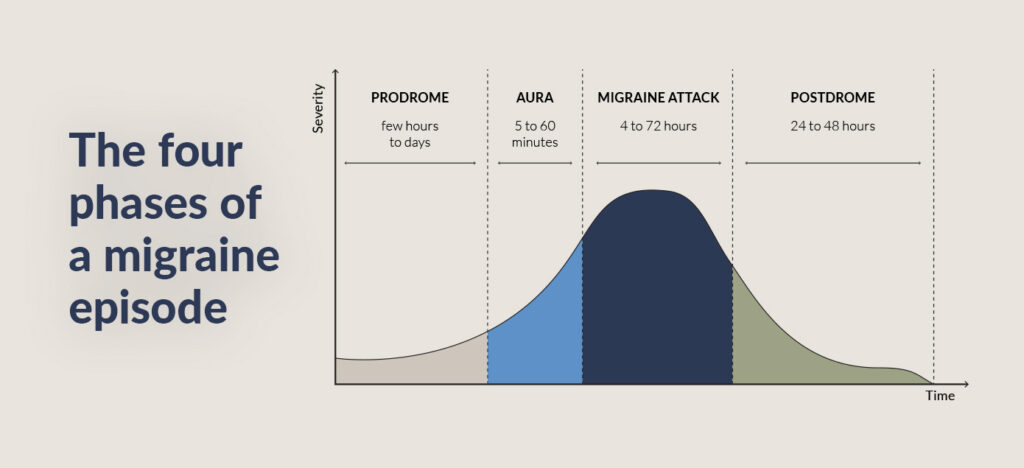
Many people with migraine only realize what's happening when the headache hits, but a migraine episode can have up to four distinct stages. Knowing the timeline of a migraine attack can help you prepare and sometimes mitigate or prevent the worst symptoms. This guide will walk you through the four phases of a migraine episode so you can develop an informed migraine management strategy.
1. The prodrome phase
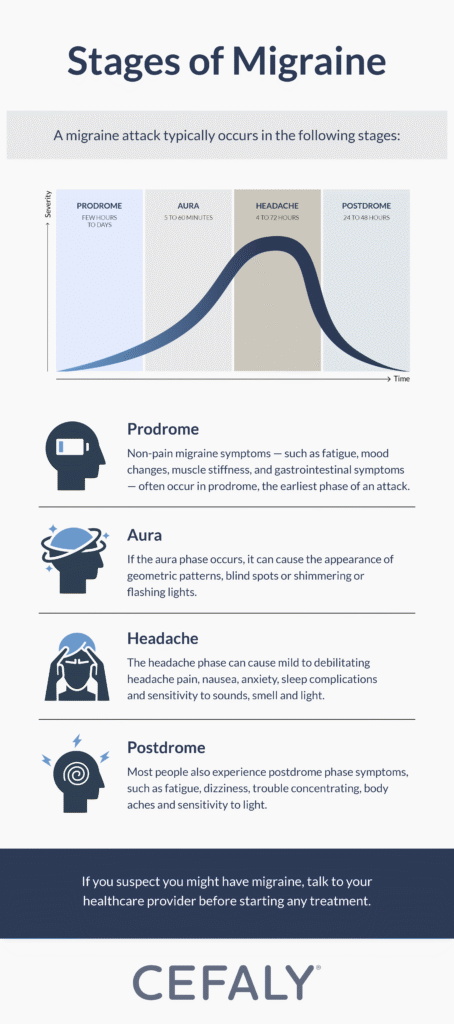
Most — though not all — migraine sufferers experience the prodrome stage first. The prodrome phase is also called the “preheadache” or “premonitory” phase. You may notice prodrome symptoms a few hours before a headache starts, but sometimes, this stage lasts 24 hours. Keeping a migraine journal can help you identify patterns in your prodrome symptoms to catch migraine as early as possible.
Prodrome symptoms vary but may include:
- Mood swings, depression or irritability.
- Difficulty focusing.
- Fatigue.
- Sensitivity to light or sound.
- Nausea.
- Muscle stiffness in your neck and shoulders.
- Frequent yawning.
- Food cravings.
- Increased urination frequency.
If you recognize any combination of these symptoms before a migraine headache, you can take them as cues to begin preventive measures. Por ejemplo, podría hacer lo siguiente:
- Take medication.
- Begin an ACUTE treatment with CEFALY.
- Avoid triggers like harsh light, loud sounds or alcohol.
- Practice relaxation exercises.
- Use an ice pack or heating pad on your head, neck or shoulders.
- Sleep if you can.




2. The aura phase
The second of the migraine stages, which also precedes the migraine headache, is the aura phase. Remember, the stages of migraine vary — some people experience the aura stage, while others experience migraine without aura. Only around 25%-30% of people with migraine experience aura symptoms.
The most distinctive aura symptoms are visual disturbances like flashing or shimmering lights, brightly colored spots, zigzag lines or blind spots. Other symptoms include:
- Numbness or feelings of pins and needles in the hands, arms and face.
- Speech difficulties.
- Dizziness.
- Muscle weakness.
These symptoms are thought to result from unusual nerve activity spreading across your brain. Cortical spreading depression (CSD) is the technical name for this phenomenon. While CSD is becoming better known, there is still a lot to uncover about it.
Aura symptoms do not usually last more than an hour, and sometimes, they subside after a few minutes. If your aura symptoms last over an hour or you experience weakness on one side of your body or loss of consciousness, you should seek medical attention.
While some episodes stop at the aura phase — these situations are known as silent migraine — aura symptoms often warn of a migraine headache to follow. If you missed the prodrome phase, this could be your cue to take preventive measures. In some cases, these symptoms accompany the headache rather than precede it.
3. The migraine attack phase
The attack stage of a migraine episode typically involves pain on one or both sides of the head. Migraine headaches can last for several hours or a few days. The pain is usually throbbing or pulsing and can range from mild to debilitating, varying from person to person and episode to episode. Besides the headache, this phase can include other symptoms like:
- Nausea or vomiting.
- Difficulty sleeping.
- Anxiety.
- Sensitivity to light, sound and smells.
Triggers like turning on lights, exercising or eating certain foods can aggravate these symptoms. Avoiding triggers, moving to a dark and quiet space, and taking acute migraine medication may help.
4. The postdrome phase
Around 80% of migraine sufferers experience postdrome symptoms following some migraine headaches. Postdrome is sometimes called a “migraine hangover.” For some people, this phase can be as debilitating as the headache.
The postdrome phase can last for several hours or up to two days. Common postdrome symptoms include:
- Fatigue.
- Body aches.
- Difficulty concentrating.
- Dizziness.
- Light sensitivity.
Postdrome is still part of your migraine episode, so avoiding triggers may help. It is unclear why some migraine episodes have a postdrome phase while others don't. Therapies that reduce migraine frequency or early relief measures are your best bet to prevent a migraine hangover. Stretching, drinking water and avoiding stress can help some people manage postdrome symptoms.
Try CEFALY to Prevent & Relieve Migraine Pain
Ways to relieve migraine
Addressing a migraine episode as early as possible gives you the best chance of relieving it. That's why understanding the stages of a migraine episode and keeping a migraine journal are helpful tactics.
When you recognize prodrome or aura symptoms, addressing triggers can prevent some headaches. If you can, move to a quiet, dark space and rest. Caffeine helps some people but is a common migraine trigger for others, so experiment with caution.
Prodrome is the best time to begin ACUTE treatment with CEFALY. CEFALY uses neurostimulation to target your brain’s trigeminal nerve, the primary pathway for migraine pain. It’s safe to use alongside your acute medications to help relieve pain.
If your migraine reaches the headache phase, you could try sleeping through the symptoms. If sleep doesn't come easy, you could use acute medications prescribed by your doctor, like triptans or analgesics. It's not too late to use CEFALY, although you'll see the best results from treatment at the earliest sign of a migraine attack.
Shop CEFALY for migraine relief
Understanding how the migraine phases develop can help you avoid or mitigate some symptoms. Make CEFALY part of your migraine management plan!
CEFALY is an easy-to-use, clinically proven migraine treatment device. The 20-minute PREVENT mode helps reduce migraine frequency, while the 60-minute ACUTE mode relieves headache pain and other bothersome migraine symptoms.
In one study, 79% of migraine sufferers experienced a reduction in headache pain after one hour of CEFALY ACUTE treatment. With appropriate use of the PREVENT treatment mode, patients in one study saw a 32.7% decrease in headache days following three months of treatment.





Últimas publicaciones

La guía esencial de dispositivos médicos para la migraña
CEFALY is an FDA-cleared medical device that targets the main pathway for migraine pain: the trigeminal nerve (the…

“CEFALY Gave Me My Life Back”: Camille’s Search for a Drug-Free Migraine Treatment
I've lived with migraine since my second pregnancy with my daughter. That pregnancy marked the beginning of my…

What Patients Need to Know About Episodic Migraine vs. Chronic Migraine
While official definitions classify episodic migraine as fewer than 15 headache days per month and chronic migraine as…