




Waking Up With Migraine
If you often wake up with a migraine attack in the morning, you're not alone. Migraine is a disease that affects 39 million people in the United States, and morning migraine is a shared experience. Migraine attacks can cause severe head pain, nausea, vomiting, fatigue and sensitivity to light, odors and sounds. These symptoms can make it difficult to get out of bed. However, there are treatments you can try to relieve attacks and reduce their frequency. You can help avoid waking up with a migraine by creating a consistent sleep schedule, prioritizing stress management or using migraine devices like CEFALY.
This article explains why you may have migraine symptoms in the morning and offers treatment and prevention tips. With this knowledge, you can identify your triggers and work towards reducing morning migraine.
Common triggers for waking up with a migraine
Everyone has a different experience with migraine, and the specific cause for attacks is still unclear. However, researchers have uncovered some potential triggers that frequently cause attacks.
Some common reasons people wake up with migraine include:
Sleep issues
Studies show that migraine and sleep have a bidirectional relationship. This means that if you have problems with sleeping, you may experience more migraine attacks than normal. Conversely, migraine can also cause sleep issues, as the pain can keep you awake.
Sleep disorders — like insomnia, sleep apnea and restless leg syndrome — are often the culprits for painful migraine attacks in the morning. This is because people with sleep disorders usually struggle to sleep or have poor-quality sleep. Too little sleep, too much sleep and irregular sleep patterns can trigger migraine, too.




Mental health disorders
Along with stress, mental health disorders such as depression and anxiety can cause migraine attacks. These disorders can affect your sleep and make you feel stressed, which are both migraine triggers.
It’s also clear that people with migraine are more likely to have a mental health disorder. This is because migraine has painful symptoms that affect quality of life. People who experience chronic migraine may become sad, fatigued, worried and stressed, which can lead to depression or anxiety.
Estrés
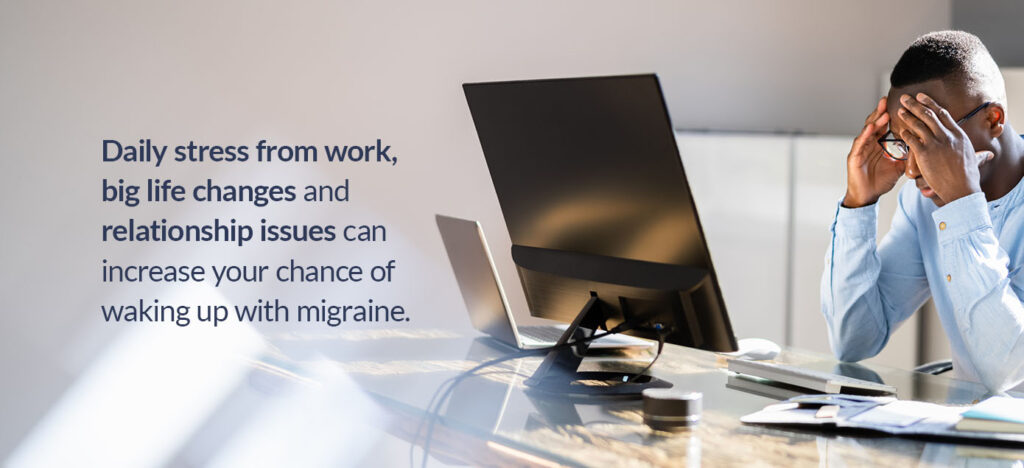
Stress is a known trigger for migraine headaches. Daily stress from work, big life changes and relationship issues can increase your chance of waking up with migraine. This may be because of how stress alters cortical excitability and brain structure.
You may even experience a migraine attack while relaxing after a stressful period. People with migraine also get stressed due to having the condition, which in turn increases migraine attacks.
Deshidratación
A simple glass of water can reduce migraine attacks. When you don’t drink enough water, your brain can shrink and pressurize nerves, resulting in a headache.
Most people get intense dehydration headaches, along with dizziness, fatigue and dry mouth. However, even mild dehydration can cause headaches, especially if you already deal with migraine. As you can't drink while you're asleep, you may wake up slightly dehydrated with migraine pain.
Medication
While taking medication can help alleviate migraine symptoms, it can also trigger them. If you take over-the-counter painkillers to help you fall asleep at night, they often wear off by the morning, leaving you vulnerable to migraine attacks. It's also common for people to have migraine attacks from the use of medication itself. This is known as a medication-overuse headache.
Caffeine and alcohol
Caffeine is often present in pain relief medication because it reduces inflammation and pressure in the brain. Some people even find that a cup of coffee can relieve their migraine symptoms. When combined with caffeine, some painkillers work faster and last longer. However, if you frequently drink coffee and suddenly stop, you may experience a caffeine withdrawal headache that lasts many hours.
Alcohol also affects the brain and is a known migraine trigger. Some people may have a migraine attack a few hours after drinking, while others only once their blood alcohol level returns to normal. If you drink alcohol in the evening, it might be the cause of your migraine attack when you wake up.
Hormonal changes
Women are more likely than men to suffer from migraine, and hormones may be to blame. During menstruation, pregnancy and menopause, women’s estrogen and progesterone levels fluctuate. These hormonal changes are a common trigger for migraine attacks. Taking birth control can also cause migraine headaches.
Diet
What you eat can impact your experience with migraine, too. Certain foods can trigger a migraine attack, so eliminating them may reduce the frequency of your attacks.
Some known food triggers are MSG, artificial sweeteners, chocolate, processed meat, cheese and beans. However, it's important to know that most migraine attacks result from a combination of triggers. For example, your chance of having an attack is higher if you also have poor-quality sleep.
Try CEFALY to Prevent & Relieve Migraine Pain
Migraine prevention and treatment
Some people find that making changes to their lifestyle and adopting new habits can alleviate and reduce migraine attacks. This is especially crucial for those who suffer from chronic migraine or have migraine attacks weekly.
If you’re waking up with migraine every morning, try:
- Home remedies: During an attack, lie down in a quiet, dark room. You can also put a cold compress on your forehead and try to meditate. Drink water if you are feeling dehydrated. Coffee or soda may help, too.
- Medication: Take an over-the-counter pain reliever or get a prescription for stronger medication if your attacks are severe.
- Symptom diary: Knowing your unique triggers can help you avoid them and have fewer attacks. To track your triggers, record your attacks in a journal and note what could have caused them.
- Sleep: Go to bed and wake up at the same time every day, and try to get between seven and nine hours of sleep.
- Exercise: Walk or complete a mild to moderate workout at least 30 minutes a day, five times a week. Regular exercise can help you manage your migraine attacks, as it reduces stress and improves sleep quality.
- Neuromodulation: Use an FDA-cleared migraine neuromodulation device, such as CEFALY, to reduce the frequency and intensity of your attacks.
Try the CEFALY migraine device
If you often wake up with migraine, CEFALY can help. This drug-free migraine treatment uses a mild electric current to desensitize the trigeminal nerve, the primary pathway for migraine pain. It's the first device of its kind to get FDA clearance, and it has two modes - ACUTE and PREVENT.
Use the 20-minute PREVENT mode at bedtime to reduce migraine frequency. 38.1% of CEFALY users in one study saw their migraine days reduced by half - or more - with compliant use. To relieve those morning migraine headaches without medication, use the 60-minute ACUTE treatment mode at the earliest sign of an attack.
Get your life back by purchasing one of our migraine devices today. We offer a 90-day money-back guarantee so you can try it out worry-free. Reach out to our team if you have any lingering questions or want to learn more!






Últimas publicaciones

La guía esencial de dispositivos médicos para la migraña
CEFALY is an FDA-cleared medical device that targets the main pathway for migraine pain: the trigeminal nerve (the…

“CEFALY Gave Me My Life Back”: Camille’s Search for a Drug-Free Migraine Treatment
I've lived with migraine since my second pregnancy with my daughter. That pregnancy marked the beginning of my…

What Patients Need to Know About Episodic Migraine vs. Chronic Migraine
While official definitions classify episodic migraine as fewer than 15 headache days per month and chronic migraine as…