




Is Too Much Screen Time Causing Your Migraine?
It might seem like there’s a screen everywhere you look. In America, adults spend an average of seven hours looking at screens every day. However, these devices surrounding us can also impact our health. If you’re experiencing pain on one or both sides of your head after looking at your phone or computer, you might have migraine or headache from screen time.
Can screen time trigger migraine?
Yes, scientific studies have found ample evidence that screen time causes migraine. Researchers have found that more screen time tends to correlate with the development of headaches like tension-type headache (TTH) and migraine headache (MH). Specifically, one small study found that screen time usage greater than 12 hours a day increases the likelihood of developing MH in students studying online.
While you might think there's no way you spend 12 hours looking at screens, consider all the different devices this encompasses - smartphones, tablets, computers, e-readers and televisions. If you normally check your phone first thing in the morning, watch the morning news, spend most of your workday on a computer and come home to enjoy your favorite show or e-book, you might be spending more time than you think staring at a screen.
Types of headaches you can get from screen time
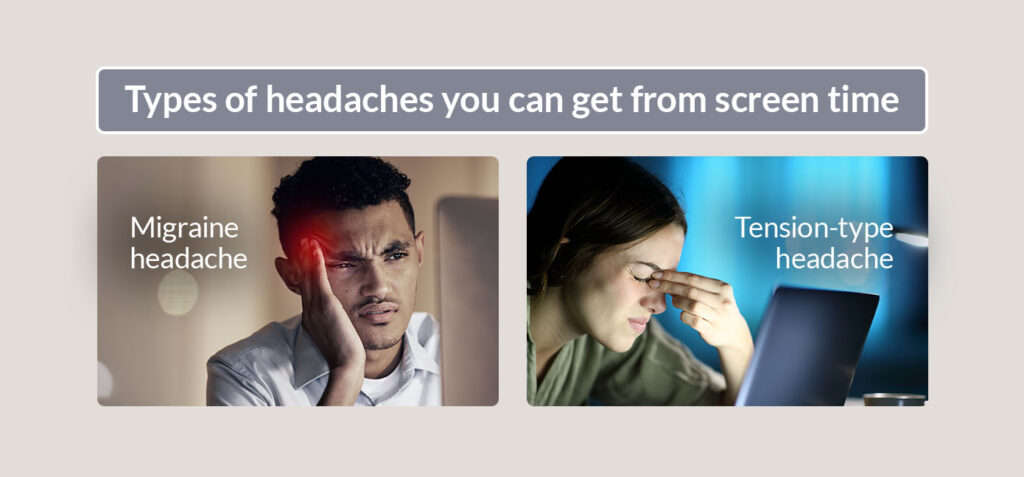
Both migraine and tension-type headaches can be triggered or exacerbated by screen time.
- Migraine headache: A migraine headache triggered by screen time will often present with light sensitivity and throbbing or pulsing pain in various locations in or near your head. You may also experience blurry vision, fatigue, nausea or vomiting. Blue light from screens can be a common trigger for migraine.
- Tension-type headache: Screen time can also trigger tension-type headaches, which involve pressure or pain around the forehead and temples. In many cases, a screen-induced TTH is triggered by eyestrain or neck strain from staring at a computer for long periods.
It’s also important to distinguish between a screen time-induced headache and other types of headache:
- Cluster headache: A cluster headache mainly occurs on one side of the head and can last anywhere from 30 minutes to a few hours. They usually happen daily around the same time.
- Sinus headache: A sinus infection can increase pressure and pain in your forehead, face and between your eyes. Treatment for the sinus infection generally resolves symptoms.
- New daily persistent headache (NDPH): Doctors are unclear about the causes of NDPH. These headaches are rare and include moderate to severe pain for longer than three months.
If you’ve recently developed new headache pain or other migraine symptoms, speak with a healthcare professional for an official diagnosis.




5 ways to prevent headaches from screens
For many of us, avoiding screens entirely isn't an option. So, how do you manage cell phone use or computer screens and migraine? The following five tips can help prevent screen light from triggering a migraine:
1. Have good posture: Posture can impact how screen time affects you, particularly your neck and shoulder muscles. Holding your body at a strange angle for long hours can lead to headaches and might even trigger migraine.
2. Wear blue-light glasses: Blue light-blocking lenses can limit the impact of screen time on your eyes by filtering the blue light from screens. Use eye drops if looking at a screen for an extended time makes your eyes dry and irritated.
3. Rest your eyes: To reduce migraine when on your computer, take frequent eye breaks. The American Optometric Association recommends a 20-second break to look at something 20 feet away every 20 minutes — known as the 20-20-20 rule. You can set an alarm on your phone or use a desktop timer to remind you to take these breaks.
4. Adjust your room lighting: Poor room lighting can also cause headaches. Working in low-light conditions strains your eyes, and having a bright light behind you can cause painful glares.
5. Limit screen time: You can integrate a few tips into your routine to make limiting screen time easier. Try to avoid looking at your phone before bed, as blue light can disrupt your sleep. Alternatively, set screen time controls on your phone to limit your use of certain apps, like social media.
What to do if you have a migraine from screen time
Follow these steps if you have a headache or migraine from using your cell phone or computer.
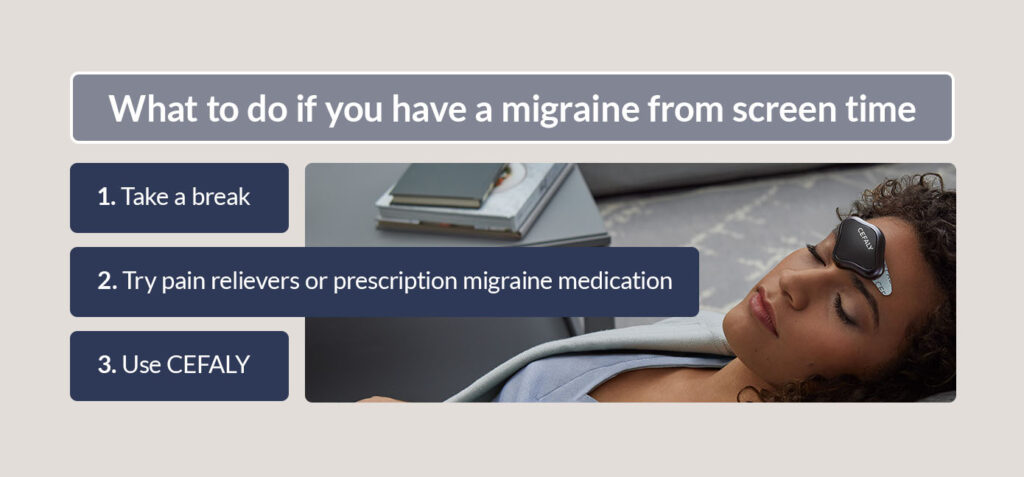
1. Take a break
If prolonged phone or computer time is causing your headache or migraine, consider taking longer breaks. The 20-20-20 rule can be effective for prevention. However, if the pain comes on suddenly, try moving to a dark room or closing your eyes for a while.
If you use a computer all day at work, be cognizant of how you spend your free time. Instead of going on your phone or playing a video game, consider screen-free activities like reading a book, doing a puzzle, or going for a walk with a podcast or audiobook.
2. Try pain relievers or prescription migraine medication
If screen time is causing a normal headache, consider over-the-counter pain relievers. If you have certain health conditions or take other medication, consult with your doctor about the right option for you.
For those living with migraine, pain management is a large part of migraine management. After being diagnosed, your doctor may prescribe you a medication to address your pain and other symptoms. Take your medicine as soon as you notice the first signs of a migraine attack.
3. Use CEFALY
Breakthroughs in migraine research have led to the development of medical devices that aid in migraine management. CEFALY is a clinically proven, FDA-cleared device for the treatment and management of migraine attacks. It sends tiny electrical impulses to stimulate the trigeminal nerve, the main pathway for migraine pain. You’ll feel a gentle tingling or vibration as you relax during your treatment.
CEFALY comes with two modes — ACUTE for the onset of a migraine attack and PREVENT for daily prevention. CEFALY relieves more than pain; in one study, 57 percent of patients reported the resolution of their most bothersome symptom, like light or sound sensitivity, nausea or vomiting. You can use CEFALY as a stand-alone solution or in conjunction with other treatment options.
Try CEFALY for migraine prevention and relief
If you experience migraine attacks due to screen use, CEFALY is a safe, effective treatment. Try CEFALY to prevent and relieve your migraine attacks with a 90-day money-back guarantee.






Últimas publicaciones

La guía esencial de dispositivos médicos para la migraña
CEFALY is an FDA-cleared medical device that targets the main pathway for migraine pain: the trigeminal nerve (the…

“CEFALY Gave Me My Life Back”: Camille’s Search for a Drug-Free Migraine Treatment
I've lived with migraine since my second pregnancy with my daughter. That pregnancy marked the beginning of my…

What Patients Need to Know About Episodic Migraine vs. Chronic Migraine
While official definitions classify episodic migraine as fewer than 15 headache days per month and chronic migraine as…