



¿Qué tipo de migraña tengo?
- Chronic and Episodic Migraine
- Migraine Aura
- Migraine Without Aura
- Hemiplegic Migraine
- Silent Migraine
- Vestibular Migraine
- Ocular Migraine
- Menstrual Migraine
If you experience migraine, you know how difficult and even debilitating this condition can be. While there are many unknowns in the medical community when it comes to the causes of migraine, medical research has led to some helpful labels we can use to classify different types of migraine.
So, what are the different migraine types? We'll explain some common varieties, including chronic and episodic migraine, migraine with and without aura, silent migraine, vestibular migraine, ocular migraine and menstrual migraine.
Do you have chronic or episodic migraine?
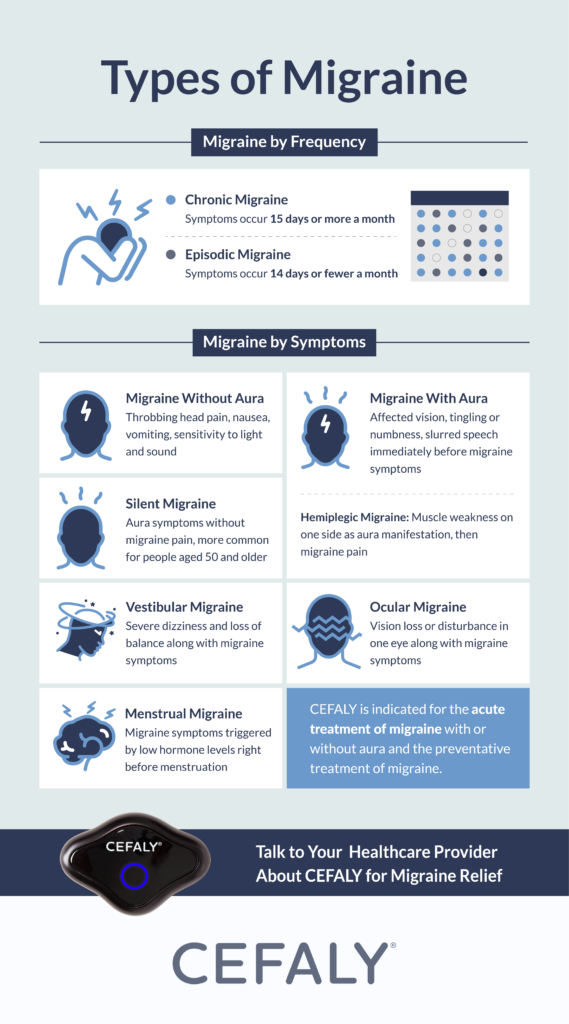
One of the most useful ways to classify migraine is by frequency. Existen dos diagnósticos principales para tener en cuenta: la migraña crónica y la migraña episódica.
How do you know if you have chronic migraine?
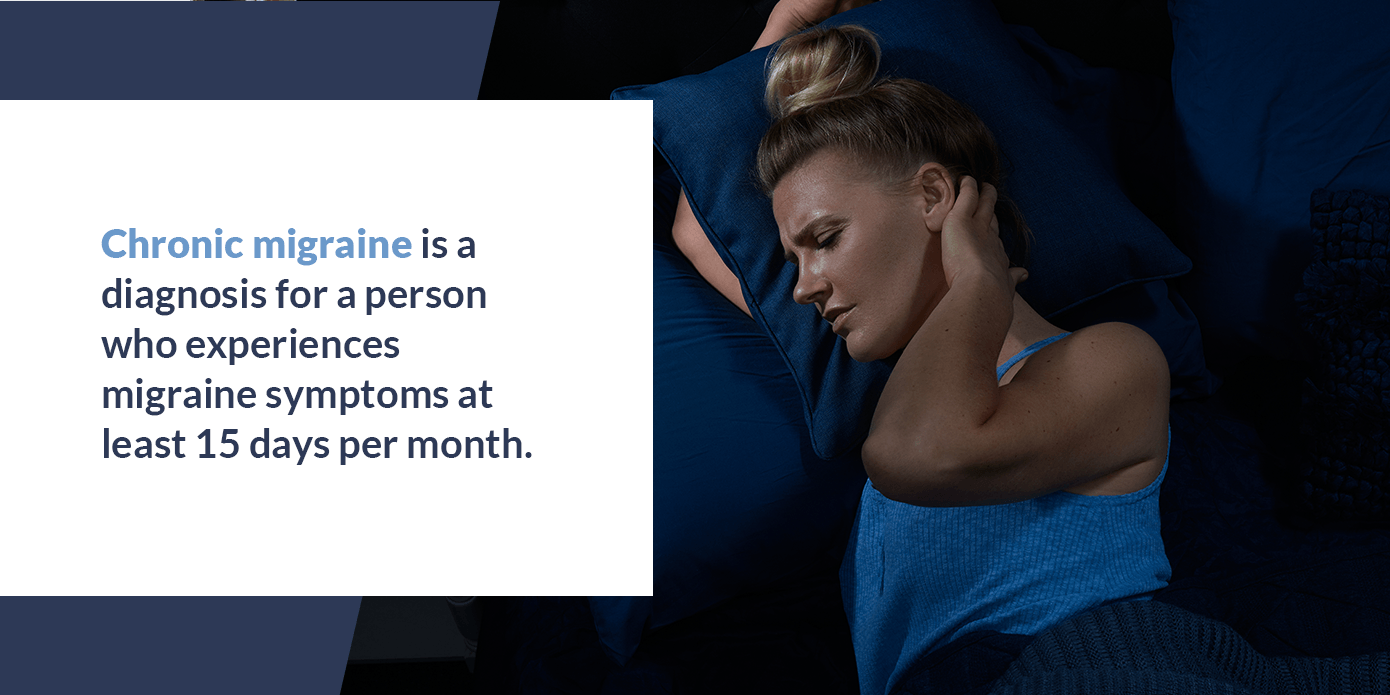
Entre el 3-5% de los estadounidenses tienen migraña crónica, aunque algunas estimaciones indican que el porcentaje es un poco más bajo. Chronic migraine is a diagnosis for a person who experiences at least 15 days per month of migraine symptoms.
En otras palabras, alguien con migraña crónica sufre tantos días de migraña o más que los días que pasa sin síntomas de ella. These are the most severe instances of migraine and often involve migraine that lasts longer in addition to their increased frequency.
While all migraine cases can interfere with a person’s professional and personal life, chronic migraine can be especially debilitating because of their frequency. Chronic migraine treatment options are more likely to focus on prevention compared to treatment plans for less frequent migraine.
What is episodic migraine?
Most people with migraine suffer from what’s known as episodic migraine. Una persona que tiene menos de 10 días de migraña por mes tiene migraña episódica de baja frecuencia, y una persona que tiene entre 10 y 14 días de migraña por mes tiene migraña episódica de alta frecuencia.
Los casos de migraña episódica pueden evolucionar a migraña crónica, especialmente con el uso excesivo de medicamentos. However, in the majority of cases, migraine remains in this episodic category.




Do you have migraine with or without aura?
We can also classify migraine into two major categories depending on a specific kind of symptom - aura. You may have heard these categories referred to as classic, or complicated, migraine and common migraine. Classic or complicated migraine occurs with aura, while common migraine is without aura.
What is migraine aura?
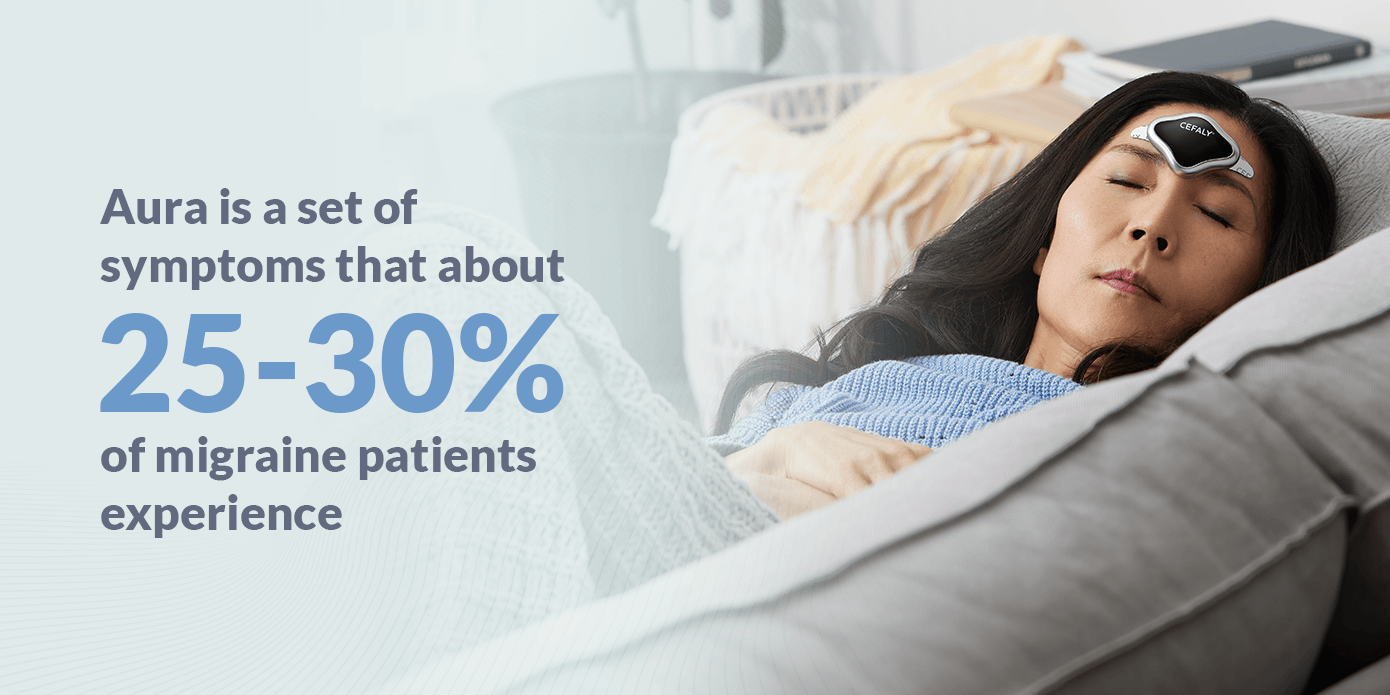
El aura es un conjunto de síntomas que sufren alrededor del 25-30% de pacientes con migraña. Estos síntomas suelen preceder de inmediato a otros síntomas de la migraña, entre ellos, el dolor de cabeza y, por lo general, duran menos de una hora. Los síntomas del aura pueden incluir molestias relacionadas con lo siguiente:
- Vision: The most common aura symptoms are vision-related. Es posible que una persona note que le afecta la visión por la aparición de puntos brillantes u oscuros, destellos de luz, estrellas o líneas en zigzag. Incluso puede sufrir temporalmente la pérdida parcial de la vista.
- Sensación física: El aura también puede implicar sensaciones de hormigueo o entumecimiento. Esto puede tener lugar en el rostro, las manos y los dedos o en un lado del cuerpo. Un aura sensorial suele comenzar con una sensación de hormigueo en un brazo que se eleva y puede extenderse a un lado de la cara.
- Speech: Another symptom some people experience in the aura stage is interference with their ability to speak. Pueden tener problemas para decir las palabras correctas o comenzar a arrastrar las palabras.
Los síntomas del aura pueden ser diferentes para cada persona, por lo que los síntomas anteriores solo representan algunas de las manifestaciones más comunes en esta etapa de la migraña. Algunas personas pueden experimentar alteraciones sensoriales menos comunes; por ejemplo, debilidad muscular, zumbidos en los oídos o cambios en el sentido del olfato o del gusto.
What is a hemiplegic migraine?
Hemiplegic migraine is a rare subtype of migraine with aura. In this type of migraine, aura manifests as one-sided muscle weakness before other migraine symptoms. Because of its similarity to stroke symptoms, you should always call medical professionals to properly diagnose these symptoms.
In addition to one-sided muscle weakness, hemiplegic migraine aura can also include vision, speech and sensory changes. Some hemiplegic migraine seems to be genetically linked, so you may experience this kind of migraine if other members of your family do.
What is a silent migraine?
Si bien el aura generalmente se considera un precursor de la fase de ataque de una migraña, algunas personas pueden experimentar el aura de la migraña sin tener dolor de cabeza. This is most common for people aged 50 and older and is nicknamed a “silent migraine.”
The most common symptom of silent migraine is vision issues. During a silent migraine, people may experience flashing lights, lines or dots and temporary blind spots. They may also experience other aura symptoms like tinnitus, dizziness and tingling. Although silent migraine skips the headache phase, it still may be debilitating.
What is migraine without aura?
Not all migraine attacks include an aura phase — in fact, most do not. Some people experience migraine with aura sometimes but also experience migraine without aura. Con una migraña sin aura, o migraña común, una persona no siempre recibe una advertencia de que el dolor de cabeza y otros síntomas de migraña están comenzando.
Common symptoms of migraine without aura include:
- Severe headache
- Sensitivity to light and sound
- Nausea and vomiting
After a migraine attack, people often feel fatigued and experience poor concentration and mental health. Both your body and your emotions take time to recover after a migraine attack. It's very normal to worry about when another attack will occur, especially if you don't have any warning from aura symptoms.
What is a vestibular migraine?
Su sentido del equilibrio proviene de su sistema vestibular. Este sistema sensorial le dice al cerebro dónde está posicionado en relación con el entorno y cómo se está moviendo para que pueda orientarse y mantenerse estable. Es probable que no tenga en cuenta este sistema sensorial, a menos que experimente un problema relacionado con él. One way your vestibular system can be compromised is through vestibular migraine.
People can experience problems with their vestibular system separate from migraine. But if you notice you have a vertigo attack at the same time as migraine symptoms like head pain, nausea or sensitivity to light and sound, you're likely dealing with vestibular migraine.
El vértigo es una sensación de balanceo o giro que le hará sentirse desequilibrado o mareado. Vestibular migraine treatment at home may combine migraine pain treatment with measures to combat this dizziness.
What is an ocular migraine?
When the aura stage isn’t present, people can still experience some aura-like symptoms during their migraine attack. For example, with an ocular migraine, you can experience vision disturbances. Ocular migraines may also be referred to as visual, monocular, retinal or ophthalmic migraines since they affect your sense of sight.
This type of migraine may seem similar to migraine with aura, which tend to have vision-related symptoms. La principal distinción es que las migrañas oculares afectan solo a un ojo, no a ambos. Si nota luces intermitentes, manchas oscuras u otras anomalías en la visión en los dos ojos, es probable que se trate de una migraña con aura. Sin embargo, si un ojo no está afectado, es probable que se trate de una migraña ocular. Además, los síntomas de la migraña ocular consisten principalmente en pérdida de visión en lugar de ver luces intermitentes u otras alteraciones visuales.
Según un estudio, la mitad de los pacientes con migraña ocular experimentaron pérdida total de la visión en un ojo. En cambio, uno de cada cinco experimentó visión borrosa. Síntomas menos comunes incluyeron pérdida parcial de la visión, oscurecimiento y puntos ciegos. El estudio también señaló que más de las tres cuartas partes de los participantes tenían dolor de cabeza en el mismo lado del ojo que experimentó una alteración de la visión. Blindness from ocular migraine attacks typically lasts less than an hour. Puede ocurrir antes o durante un dolor de cabeza causado por una migraña.
What is a menstrual migraine?
This kind of migraine is also called a period migraine or hormone headache. During a woman’s cycle, estrogen levels drop right before menses, the start of blood flow. This change in hormone levels can trigger migraine in some people.
Because of its connection to hormone changes, this kind of migraine occurs right before or during a woman's period. Symptoms can include the following:
- Severe head pain
- Sensitivity to light and sound
- Blurred vision
- Mareos
- Nausea and vomiting
If your migraine attacks are caused by hormonal changes, you may be able to find relief with hormonal treatments or birth control, as well as other migraine treatments.
Treat migraine pain with CEFALY
No matter what type of migraine you experience, the desire for relief is universal. If medications and home remedies have fallen short, there's an alternative solution you can try to incorporate into your migraine treatment plan - CEFALY.
CEFALY Connected from CEFALY Technology is clinically proven to help prevent and treat migraine pain by targeting the trigeminal nerve. By sending tiny electrical impulses to this nerve, the CEFALY device can relieve migraine symptoms and prevent future attacks.
CEFALY is cleared by the FDA and is convenient to use in your own home or on the go. Obtenga más información acerca de CEFALY ¡y consiga el suyo hoy mismo!





Últimas publicaciones

La guía esencial de dispositivos médicos para la migraña
CEFALY is an FDA-cleared medical device that targets the main pathway for migraine pain: the trigeminal nerve (the…

“CEFALY Gave Me My Life Back”: Camille’s Search for a Drug-Free Migraine Treatment
I've lived with migraine since my second pregnancy with my daughter. That pregnancy marked the beginning of my…
What Patients Need to Know About Episodic Migraine vs. Chronic Migraine
While official definitions classify episodic migraine as fewer than 15 headache days per month and chronic migraine as…