




How to Prevent a Migraine Attack in The Summer
When the sun comes out, the only thing on your mind should be pool days and trips to the beach, not migraine pain. Yet, 12% of adults experience migraine, and for many, the warm weather only worsens their symptoms. If your migraine symptoms become more severe or frequent in the summer, you may feel you need to avoid outdoor activities when the temperature rises. Fortunately, migraine doesn’t have to keep you indoors. You can help prevent summer migraine attacks by prioritizing wearing sunglasses, staying hydrated and avoiding overexertion during peak sun hours.
Once you know why your migraine symptoms get worse when the weather gets hot, you can begin to manage them. But don't worry - you don't have to figure it out on your own. Here's a guide to help you understand how migraine is affected by summer weather, with tips for preventing and managing the symptoms.
3 reasons your migraine gets worse in the summer
While it may seem like you get more random migraine attacks in the summer, they may not be as random as you think. The rising temperature and longer days spark a series of changes that may cause your summer migraine. Here are just a few possible triggers:
1. The weather changes
In summer, many regions of the world experience hot, sticky weather as days get hotter. Temperature changes can affect an individual's body in many ways. If overlooked, these changes can trigger a migraine attack.
Hotter temperatures and increased humidity cause people to sweat more. The more a person sweats, the greater their risk of becoming dehydrated - and dehydration may trigger migraine. Other weather changes that can induce a migraine attack include:
- Bright sunlight
- Sun glare
- Dry or humid air
- Storms and intense wind
Shifting barometric pressures can also trigger a summer migraine attack. While a person’s sinuses are usually at equilibrium with the barometric pressure, this equilibrium is disturbed when the pressure changes in the summer, and some people may experience a migraine attack.
A 2015 study found that the shift in barometric pressure associated with an incoming storm caused 75% of people in the study to experience a migraine attack. Though there is little you can do to avoid this trigger, you can keep an eye on the weather and atmospheric changes to know what to expect and create a plan to manage symptoms.
2. Your daily habits change
Many people unknowingly change their habits in the summer. The increased amounts of sunlight and longer days cause many to get less sleep than in previous seasons. These changes result in a migraine attack for some.
In addition to changing your sleep routine, you may also eat differently or indulge in what you do not usually eat at picnics or on vacation. Some of these foods may cause a migraine attack.
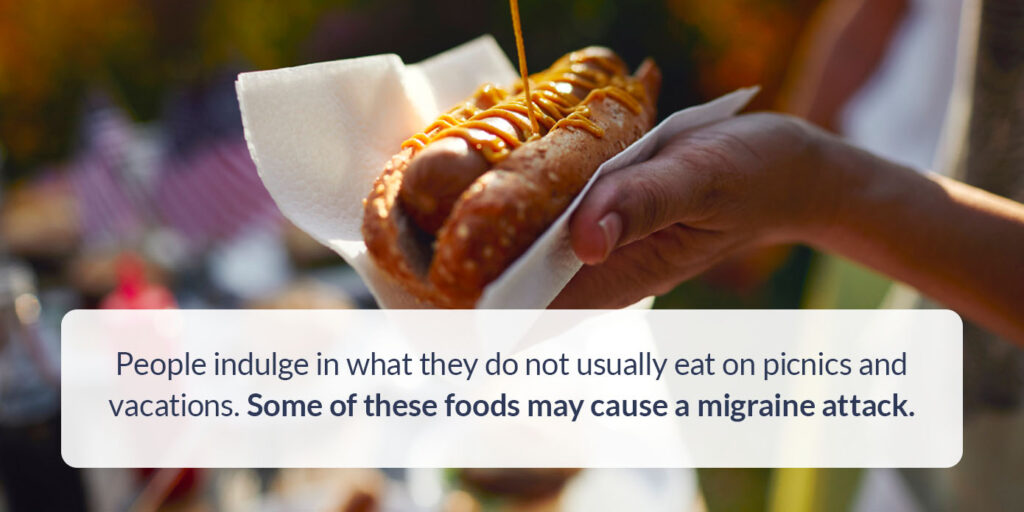
Common summer foods that have been found to trigger a migraine include:
- Hotdogs
- Bacon and sausage
- Pre-marinated meat
- Drinks with high amounts of sugar, caffeine or aspartame
- Pickled items
- Citrus fruits
- Pineapple
- Alcohol — especially beer, wine and dark liquor
- Pre-made sauce with high amounts of sugar
If you want to know if a particular food triggers your migraine symptoms, try an elimination diet - but know that sometimes it isn't the food alone that sparks a migraine attack. When combined with other factors, like heat and physical activity, food may be enough to send you over your personal threshold.
Don't be discouraged by the length of the list. There are plenty of other foods and alternatives you can choose to minimize your chances of developing a migraine attack. A few options include:
- Fresh cheeseburgers made with ground beef
- Pulled pork with homemade barbecue sauce
- Fresh mocktails with summer fruits
- Cool, sparkling water
3. Your plans change
It is hard to account for everything that will happen in the summer. While you might be a master planner in the other seasons, summer can disrupt your carefully curated schedule. While spontaneous plans may lead to the best adventure you have ever had, they could also lead to a migraine attack.
If a last-minute getaway causes feelings of stress, it could trigger your symptoms. When choosing a trip or event, consider how it will affect your stress levels. Unplanned trips could also cause you to turn to migraine-inducing foods or activities. Consider ways you can balance spontaneity and planning, like prioritizing staying cool and hydrated while exploring.




Tips on how to enjoy Summer with fewer migraine episodes
Now that you have a greater understanding of why your symptoms worsen in the summer, let’s go over some tips and tricks for minimizing the chance of developing a summer migraine:
1. Keep sleep patterns steady
En verano, es posible que se levante más temprano, se acueste más tarde o incluso duerma una siesta a mitad del día. Parece muy relajante, pero los hábitos de sueño irregulares pueden desencadenar ataques de migraña. Trate de cumplir un horario, y acostarse y levantarse a la misma hora todos los días. Si no duerme bien, evite demasiada luz artificial por la noche y mantenga el dormitorio fresco y oscuro.
2. Stay hydrated
Existe una conexión claramente definida entre la deshidratación y los ataques de migraña. Beber agua extra puede reducir la frecuencia de las crisis. En un estudio, un grupo de personas con migraña recibieron la indicación de beber seis vasos adicionales de agua por día. While they averaged only four extra cups, those participants reported 21 fewer hours of pain in a two-week period, compared to the control group.
3. Beat the heat
A study published in Neurology found a definite connection between summer heat and migraines: a 9-degree (Fahrenheit) increase in temperature correlated with a 7.5 percent increase in the likelihood of a serious migraine attack. Para evitar las migrañas, es mejor evitar la parte más calurosa del día, buscar espacios más frescos y (de nuevo) beber mucha agua. Rather than planning a long run or game of tennis in the middle of the day, try to plan these activities near sunrise or sunset to limit the stress put on your body. Before you agree to do any physical activity outdoors, check a weather app and a digital barometer.
4. Monitor your stress levels
¿Alguna vez tuvo una migraña por "bajada"? Estas crisis se producen después de un período de estrés o de ansiedad. Poco después de que disminuye el estrés, aparece un ataque de migraña. Lo único bueno acerca de las migrañas por bajada es que pueden preverse, lo que significa que puede hacer planes en relación con estos episodios. Su plan de contingencia para las migrañas por tensión podría incluir tomarse un descanso, prever cuidado adicional para los niños o simplemente practicar técnicas para reducir el estrés. Si está planificando unas buenas vacaciones de verano, trate de no programarlas inmediatamente después de terminar un proyecto importante o, si no tiene otra opción, deje pasar algunos días como amortiguación para relajarse física y mentalmente.
5. Maintain your migraine prevention practice
En verano, es común que se modifiquen o se descuiden los horarios. Simplemente recuerde que a las personas con migraña les va mejor cuando mantienen una rutina. Practique la higiene para evitar dolores de cabeza todas las semanas: ejercicio moderado, horarios de comida regulares y hábitos de sueño previsibles.
6. Understand your specific weather triggers.
Common weather-related migraine triggers are temperature, humidity, bright or flickering light, winds and specific weather conditions, such as an unusual warm front, said Jan Hoffman, MD, PhD, a migraine researcher who spoke about this topic at the 2021 Migraine World Summit. Barometric pressure can also be a trigger — not low or high pressure, necessarily, but a sudden shift from one to the other.[i]
Sin embargo, el Dr. Hoffman comenta que, aunque muchas personas creen que el clima es un factor desencadenante de la migraña, puede ser que en realidad la desencadenen otros factores. Su teoría es que las personas que ya están en la primera fase de la migraña pueden ser más sensibles a los cambios de temperatura, a la luz o a la presión barométrica, por lo que los notan de forma más intensa.
¿Cómo puede determinar los desencadenantes específicos de sus migrañas? The best way is to keep a headache diary, whether on paper or in an app. When you track your migraine attacks and symptoms, as well as factors like diet, sleep and weather, you can spot recurring patterns that may trigger your summer migraine.
7. Go low-impact.
Cuando se sufre de migraña y se hace ejercicio, los expertos suelen recomendar elegir actividades de baja intensidad, sin sacudidas ni grandes impactos. Algunas buenas opciones son:
- Nadar
- Caminar
- Andar en bicicleta
- Practicar yoga
- Practicar Tai Chi
¡Pero debe hacer lo que le realmente le gusta! Si le encanta salir a correr, entonces corra. Asegúrese de hidratarse y preste atención a las señales de su cuerpo. Si le encanta escalar en roca, entonces escale. Para evitar la tensión en el cuello que puede provocar la migraña, algunos escaladores recomiendan usar gafas de seguridad que refractan la luz.
8. Like a scout, be prepared for a migraine in the Summer.
If you’re venturing out for the day or the weekend, bring key elements from your migraine tool kit:
- Water: You already know that dehydration can trigger migraine attacks, and it's easy to underestimate the amount of water you'll need in the summer. Según los profesionales de las actividades al aire libre de REI, las caminatas intensas en climas cálidos pueden requerir que beba 1 litros de agua, o más, por hora. They also recommend pre-hydrating before you exercise and bringing sports drinks or powders to restore your electrolyte balance.[ii]
- Snacks: Skipping meals can also be a migraine trigger. Los bocadillos ideales para evitar la migraña pueden ser: frutas frescas (las manzanas, las peras y las uvas son muy buenas), zanahorias, apio, semillas de girasol, pretzels, papas fritas.
- Sunglasses and a hat: If you're sensitive to bright light, these are a must-have. Las mejores gafas de sol para la migraña son las polarizadas, que reducen el resplandor de la luz solar reflejada, o tienen un tinte FL-41.
- Cooling gear: To avoid overheating, wear breathable, lightweight clothing. Un pañuelo refrescante para el cuello o un sombrero respirable pueden brindar un reconfortante alivio en los días más calurosos.
- Acute migraine treatment: Bring your CEFALY, your migraine medication, and any other treatments you rely on.
Try CEFALY to Prevent & Relieve Migraine Pain
9. Pay attention to your other triggers
Por sí solo, el clima cálido y húmedo podría no provocar una migraña. But if you’re already stressed or sleep-deprived, you could be at risk.
"Cada vez hay más pruebas que demuestran que, a lo largo de un mes determinado, aquello que puede desencadenar un ataque de migraña varía sustancialmente", dijo el Dr. Hoffman. "Así que hay días en los que uno está muy susceptible a sufrir un ataque de migraña, y otros días en los que no. Probably, for example, a change in weather may be the last thing you need to trigger an attack, whereas on another day, you just wouldn't care."
CEFALY can help raise your migraine threshold by gradually desensitizing the trigeminal nerve. CEFALY envía diminutos impulsos eléctricos a través de un electrodo autoadhesivo que se coloca en la frente para estimular el nervio trigémino, lo que reduce la frecuencia y la intensidad de los ataques de migraña.
Use the 20-minute PREVENT program each day! Daily use is clinically proven to help prevent migraine attacks: In one study, CEFALY users saw an average 30% drop in migraine days after three months of treatment.
Experiencing summer migraine pain? Try CEFALY risk-free
CEFALY is an over-the-counter medical device users wear to minimize migraine pain. The device has been cleared by the FDA and is clinically proven as a safe, non-invasive way to help relieve or reduce pain from migraine in individuals 18 and older.
CEFALY offers users a drug-free way to gain migraine relief. The device uses external trigeminal nerve stimulation (eTNS) to stimulate and desensitize the trigeminal nerve, which acts as the main path for migraine pain.
Created by people who know the physical and emotional pain a migraine causes, CEFALY’s purpose is to help people relieve their migraine symptoms and enjoy more migraine-free days.
To find out more information or buy our product, visit our site today. Because we want you to love CEFALY, you can try the product for 90 days, and if you are not satisfied, send it back for a full refund.

Related Posts:



Últimas publicaciones

La guía esencial de dispositivos médicos para la migraña
CEFALY is an FDA-cleared medical device that targets the main pathway for migraine pain: the trigeminal nerve (the…
“CEFALY Gave Me My Life Back”: Camille’s Search for a Drug-Free Migraine Treatment
I've lived with migraine since my second pregnancy with my daughter. That pregnancy marked the beginning of my…
What Patients Need to Know About Episodic Migraine vs. Chronic Migraine
While official definitions classify episodic migraine as fewer than 15 headache days per month and chronic migraine as…