




Identificar los desencadenantes de las migrañas estacionales
Si tiene tendencia a tener episodios de migraña, es posible que ciertas estaciones los desencadenen más que otras. Seasonal migraine attacks are triggered by changes in weather and shifts in barometric pressure, humidity, temperature, and more.
Cada temporada tiene desencadenantes de migraña relacionados con el clima que pueden aumentar la probabilidad o la gravedad de un episodio de migraña. Identificar los desencadenantes estacionales puede serle útil para comprender mejor cómo el clima afecta sus patrones de migraña, lo que le permitirá prepararse ante posibles desencadenantes.
Seasonal migraine triggers
Certain environmental conditions can trigger a migraine. Changing weather patterns, like a shift between seasons, are a common environmental migraine trigger. Changing seasons are often associated with fluctuating atmospheric pressure, changing temperatures and differing sunlight amounts. While every migraine may have a different cause, understanding the potential triggers associated with each season can help you prepare.
Spring
Spring is often associated with frequent weather changes and lots of rain. Such weather changes have to do with fluctuating atmospheric pressure, or barometric pressure. Your sinuses typically balance with the atmospheric pressure, so when it changes, you may feel a difference in your head compared to what’s happening in the atmosphere, which can trigger a migraine.
Seasonal allergies like pollen and hay fever are also common for many people in the spring. While migraine isn't necessarily a symptom of seasonal allergies, you may experience more frequent migraine if you have seasonal allergies.
Summer
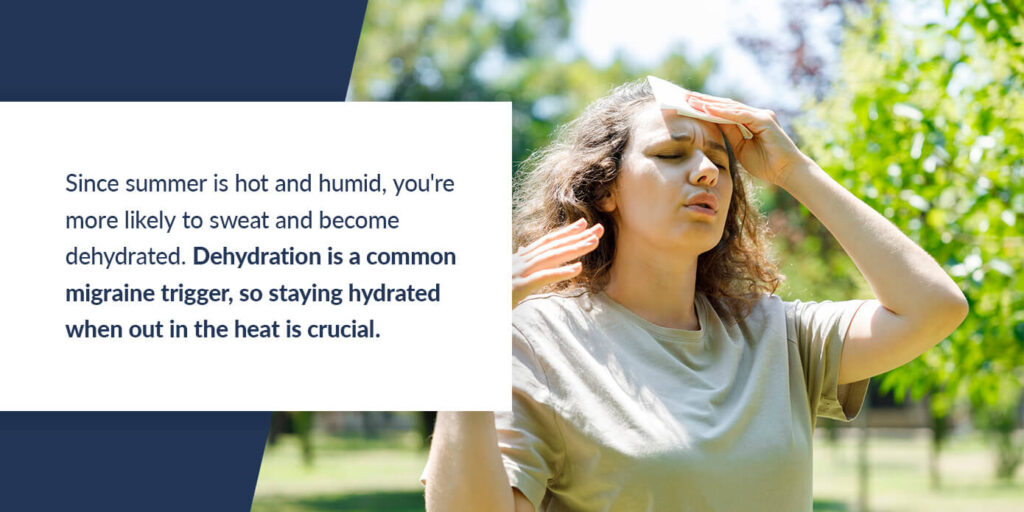
Since summer is hot and humid, you’re more likely to sweat and become dehydrated. Dehydration is a common migraine trigger, so staying hydrated when out in the heat is crucial. The amount of sunlight in the summer can also trigger migraine. For example, longer days may change your sleep schedule, triggering migraine. Experiencing a summertime migraine is especially possible if your sleep pattern becomes inconsistent. Additionally, the bright sun and glare may trigger migraine in some people.
Fall
Similar to the days getting longer over the summer, the days getting shorter in the fall can cause another shift in your sleep schedule and trigger migraine. Be sure to get enough sleep during autumn. Temperature fluctuations as the weather cools down may also be a trigger. Atmospheric pressure is another factor to consider as the humidity decreases.
Winter
Winter can unsuspectedly increase dehydration, triggering migraine. The cold, dry air can dehydrate your body, much like during the summer, especially when using heating systems that can further dry out the air. Shifts in atmospheric pressure can cause snowstorms, nasty weather and migraine.




Other weather-related triggers
Most weather-related triggers are associated with atmospheric pressure changes, as these shifts can cause various weather conditions depending on whether the atmospheric pressure rises or falls. For example, barometric pressure plays a significant role in weather changes like rain, storms and humidity. Barometric pressure changes occur day-to-day, so they can affect people with migraine throughout the year.
Another big weather-related migraine trigger is bright sunlight, which can occur throughout the year. For example, bright sunlight is often associated with summer, though the glare of the snow on a sunny day and general brightness may also trigger a migraine during the winter. Knowing these types of triggers enables you to anticipate when you're more likely to experience a seasonal migraine attack.
Learn How CEFALY Prevents & Relieves Migraine Pain
The importance of tracking triggers
Most people with migraine have different triggers in general, and the same can be said of people with seasonal migraine triggers. Migraine attacks are also typically caused by a combination of triggers rather than a single trigger. For example, a weather-related trigger like temperature or humidity changes would have to be quite dramatic to trigger migraine on their own. More often, seasonal triggers cause migraine attacks when in combination with other triggers. For example, experiencing stress-related triggers while dealing with hay fever may increase the likeliness of migraine attacks.
Since your triggers are likely different from another person's, tracking them is essential to better understand and prepare yourself for them. Migraine management apps like CeCe from CEFALY allow you to log and track migraine attacks, triggers, symptoms and more, allowing you to identify and understand your migraine patterns.
Handling seasonal migraine triggers
While avoiding your normal migraine triggers, like red wine or noisy environments, is relatively easy, completely avoiding seasonal migraine triggers is nearly impossible because they’re connected to the weather. Fortunately, preventive measures like monitoring the weather can help you predict when you may be at risk of a migraine attack. Predicting your triggers and tracking your migraine patterns is one of the best ways to take better control of your migraine attacks. Here are a few additional things you can do throughout the year to handle seasonal migraine more effectively:
- Stay hydrated: Dehydration is a common migraine trigger, and the seasons can significantly impact your hydration. While drinking enough water is important year-round, be sure to really focus on drinking more water than usual during the summer and winter months. These seasons are particularly dehydrating, so drinking lots of water can help you handle migraine triggers during the hot and cold months.
- Control seasonal allergies: If you struggle with seasonal allergies, you’ll want to do your best to maintain control over those symptoms, as they can trigger or worsen migraine attacks. You may want to take allergy medicine through the spring and summer, especially when dealing with pollen allergies.
- Monitor the weather: Especially during the spring when the barometric pressure frequently fluctuates, be sure to monitor the weather to prepare for migraine triggers. Keep an eye out for storms, wind, significant temperature changes and days with full sun. As you identify and track the triggers that affect you, you’ll be able to prepare for weather changes more effectively.
- Track sleep cycles, diet and exercise: Tracking other areas of your life can help you better prepare for seasonal migraine triggers. Since many seasonal migraine triggers combine with triggers in these areas of your life, keeping your diet, sleep habits and exercise in check will help you avoid those trigger combinations.
- Avoid seasonal colds: Do your best to avoid seasonal colds in the fall and winter. Dress warm, eat healthy foods, stay hydrated and avoid contact with anyone who’s been sick. While avoiding illness isn’t always possible, preventive measures can help you avoid cold symptoms that could worsen your winter migraine.

Keep seasonal migraine triggers under control with CEFALY
At CEFALY, we understand the need to gain better control over your seasonal migraine triggers. With CEFALY Connected and the CeCe app, you can treat your migraine and track your triggers more effectively. Use your Bluetooth-enabled CEFALY device when you feel a migraine attack. When connected to CeCe, you can track your sessions, get treatment reminders and monitor your triggers.
To learn more about CEFALY devices and what treatment could look like for you, contact our team today.





Últimas publicaciones

La guía esencial de dispositivos médicos para la migraña
CEFALY is an FDA-cleared medical device that targets the main pathway for migraine pain: the trigeminal nerve (the…

“CEFALY Gave Me My Life Back”: Camille’s Search for a Drug-Free Migraine Treatment
I've lived with migraine since my second pregnancy with my daughter. That pregnancy marked the beginning of my…

What Patients Need to Know About Episodic Migraine vs. Chronic Migraine
While official definitions classify episodic migraine as fewer than 15 headache days per month and chronic migraine as…