



Cluster Headaches vs. Migraine
- What is a cluster headache
- What is a migraine
- Similarities between cluster headache and migraine
- Differences between cluster headache vs. migraine
- Treatment options
Around 40% of people worldwide experience headache disorders. Among these, cluster headache (CH) and migraine are two of the most disruptive. Both conditions can cause severe pain, but they have different symptoms, triggers and treatments. If you have regular, severe headaches, discovering if you have migraine or cluster headaches can help you find the right solution.
What is a cluster headache?
Cluster headaches are severe headaches lasting from 15 minutes to three hours. These episodes recur over several weeks, months or years, sometimes several times a day. The headache usually presents as stabbing pain over one eye, one temple or the forehead. Other symptoms can include:
- Red and teary eyes
- A drooping eyelid
- A blocked or runny nose
Though researchers haven’t discovered what causes cluster headaches, potential triggers in someone who’s prone to them include:
- Alcohol
- Cigarettes
- Harsh light
- Overexertion
- Heat
- Processed meats
¿Qué es la migraña?
Migraine is a neurological disorder with a range of possible symptom patterns, but it usually presents with a moderate or severe throbbing headache. Migraine pain can last up to 72 hours and may come with symptoms like:
- Nausea and vomiting
- Sensitivity to light and sound
- Visual disturbances called aura
- Mareos
- Neck stiffness
Migraine episodes have four phases, though attacks may skip one or more of these phases:
- Prodrome: This phase includes pre-headache warning signs like mood swings, loss of focus, fatigue, light sensitivity and nausea.
- Aura: Only around a quarter to a third of people with migraine experience aura symptoms. The most noticeable signs are visual disturbances like flashing lights, colored spots or zigzags.
- Headache: This is the most recognizable migraine phase, involving a throbbing headache on one or both sides of the head. Other symptoms like sensitivity to light, sounds or smells may accompany the headache.
- Postdrome: Also called a migraine hangover, this phase may involve fatigue, aches, light sensitivity and difficulty concentrating.
Migraine’s causes are also uncertain, and some triggers overlap with those of cluster headaches. Some of the most common migraine triggers include:
- Mental stress
- Hormonal shifts
- Caffeine, alcohol and other trigger foods
- Weather changes
- Sleeping too much or too little




Migraine and cluster headaches’ similarities
Migraine and cluster headaches have several similarities. These can sometimes make them difficult to tell apart:
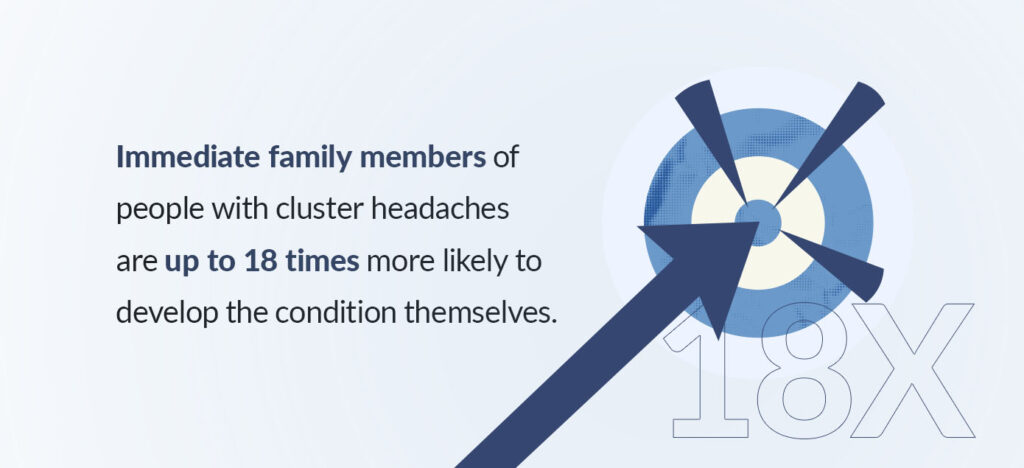
- Causes: Both conditions have unanswered questions about their causes, but both seem to have a genetic component. Genes may account for up to 60% of a person’s susceptibility to migraine. Meanwhile, immediate family members of people with CH are up to 18 times more likely to develop the condition themselves.
- Triggers: Many of the same factors can trigger migraine episodes or cluster headaches. These include stress, bright light, overexertion, alcohol, sleep disruptions and weather changes.
- Symptoms: Migraine and cluster headaches can both cause severe headaches. Some other migraine symptoms, like light sensitivity and nausea, can also happen during cluster headaches.
Cluster headache vs. migraine differences
Despite several similarities, the differences between cluster headaches and migraine are numerous. Recognizing these differences can help you understand your experience and develop the right headache management plan.
Prevalence
Migraine affects around 15% of people worldwide. It impacts three times more women than men. Cluster headache is rarer, affecting up to 0.1% of adults. Men are more likely than women to develop CH.
Triggers
Though many of the same triggers can set off migraine and cluster headaches, the likelihood of the same trigger causing each of these conditions can differ. For example, alcohol is the most common cluster headache trigger. While it can also trigger CH, stress is the most common trigger for migraine patients.
Síntomas
The headache pain in a migraine attack usually has a throbbing or pulsating quality and is often concentrated on one side of the head. The amount of pain can vary, and the headache often follows a prodrome stage. Nausea, photophobia and phonophobia often accompany the headache, and aura symptoms may also appear before or during the attack.
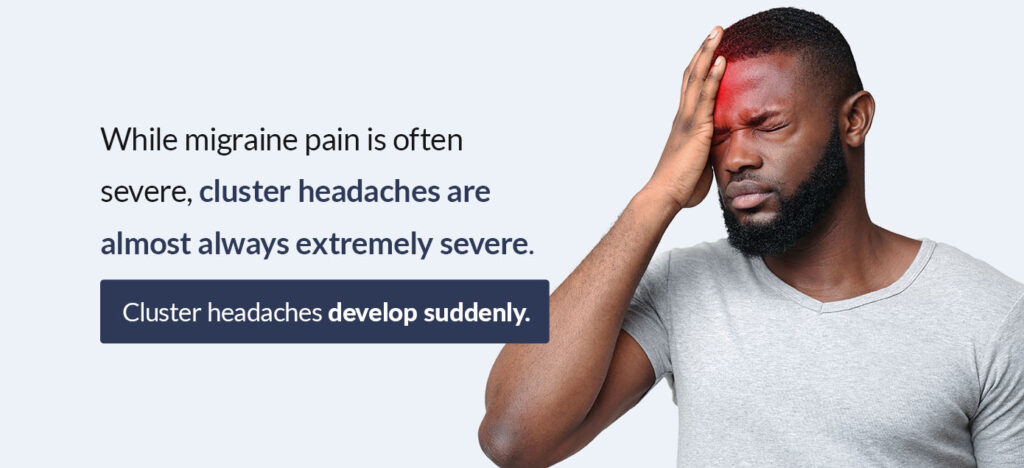
While migraine pain is often severe, cluster headaches are almost always extremely severe. People experience sharp, stabbing pain on one side of their face - often over one eye. While nausea, photophobia and phonophobia can occur, congestion, a drooping eyelid and teary eyes are the most common accompanying symptoms. In contrast to the typical gradual onset of a migraine attack, CH headaches develop suddenly.
Duration and frequency
Migraine attacks last longer than cluster headaches. Cluster headaches earn their name by occurring in clusters. The headaches can strike every day and often multiple times a day, recurring for weeks or months.
It’s rare for more than one migraine attack to strike in a day. When migraine headaches occur for 15 or more days per month for at least three months, doctors classify this as a chronic migraine case, provided at least eight of those days feature other migraine symptoms.
But even chronic migraine is distinct from cluster headaches. You may have cluster headache rather than migraine, chronic or otherwise, if any of the following statements are true for you:
- Your headaches are sudden.
- The pain feels stabbing rather than throbbing.
- You get a headache more than once a day.
- Your attacks last three hours or less.
- You seldom experience nausea and light sensitivity.
Cluster headache vs. migraine treatment options
The severe pain of cluster headaches requires fast-acting acute treatments to relieve pain, including:
- Triptans like sumatriptan
- Oxygen therapy
- Intranasal lidocaine
Preventive treatments for cluster headaches usually involve prescription medications like verapamil or corticosteroids.
While triptans may also be effective for relieving migraine pain, the other treatments differ. Other acute migraine treatments include:
- Electrical nerve stimulation (ENS) therapies like external trigeminal nerve stimulation (eTNS)
- Nonsteroidal anti-inflammatory drugs (NSAIDs)
- Ergotamine derivatives
- Addressing any environmental triggers
Preventive migraine treatments include:
- eTNS
- Beta blockers
- Antidepressants
- Antiseizure medications
- Avoiding known migraine triggers
Get CEFALY for migraine treatment
Migraine and cluster headache can both disrupt your life. The good news is that effective treatments are available for both conditions. One clinically proven migraine treatment option is CEFALY.
CEFALY is an FDA-cleared migraine treatment device with PREVENT and ACUTE treatment modes. This cost-effective device requires no prescription and is clinically proven to prevent and relieve migraine pain by stimulating your brain’s trigeminal nerve. Your CEFALY purchase comes with a 90-day money-back satisfaction guarantee, so you can make sure it works for you.
Experience a better migraine treatment: Order CEFALY today.


Últimas publicaciones

La guía esencial de dispositivos médicos para la migraña
CEFALY is an FDA-cleared medical device that targets the main pathway for migraine pain: the trigeminal nerve (the…

“CEFALY Gave Me My Life Back”: Camille’s Search for a Drug-Free Migraine Treatment
I've lived with migraine since my second pregnancy with my daughter. That pregnancy marked the beginning of my…
What Patients Need to Know About Episodic Migraine vs. Chronic Migraine
While official definitions classify episodic migraine as fewer than 15 headache days per month and chronic migraine as…