



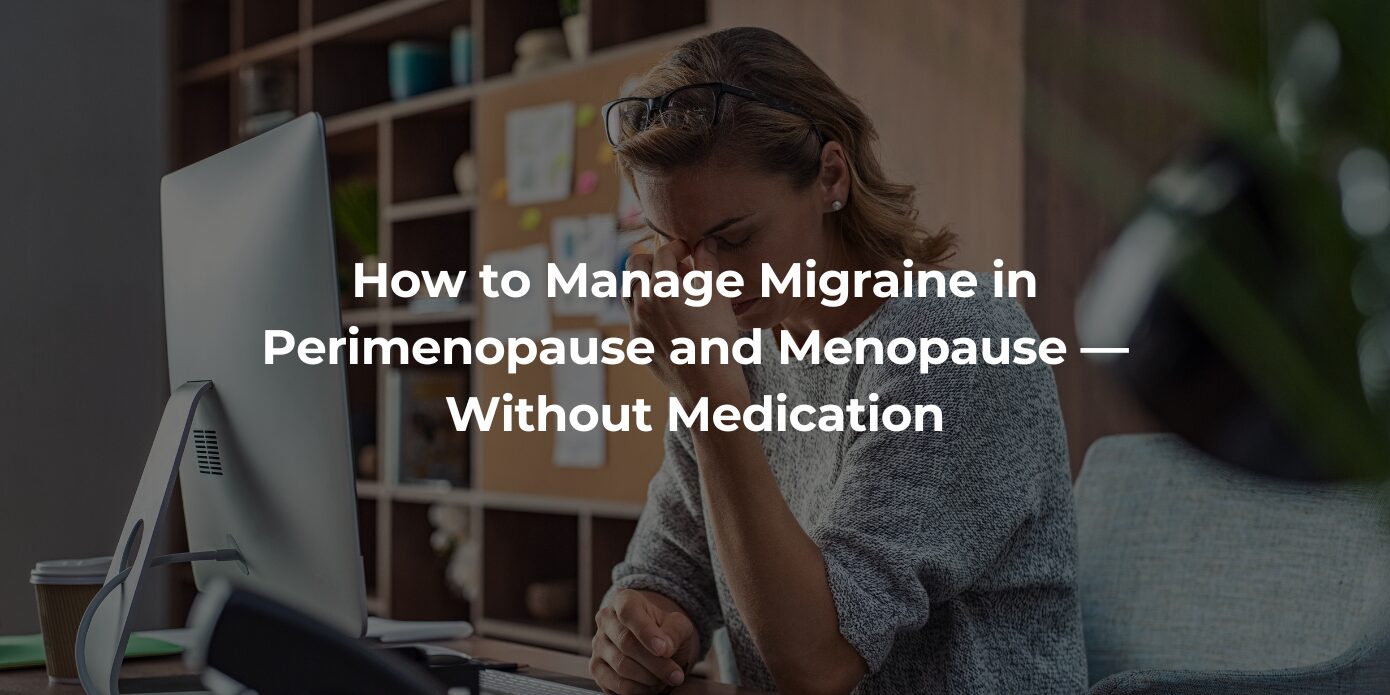
How to Manage Migraine in Perimenopause and Menopause — Without Medication
People always told you migraine would get better as you got older. So why are your perimenopause migraine symptoms worse than ever?
Approximately 30% of women experience a peak in their migraine symptoms during perimenopause. This is the period of time before a woman enters menopause, which means not having a menstrual period for 12 consecutive months. Perimenopause typically begins in the early to mid 40s and can last 8-10 years.
What triggers migraine in perimenopause?
Wondering, “Why am I suddenly getting migraines in my 40s?” The hormonal swings of perimenopause are to blame. When estrogen levels fluctuate, the Association of Migraine Disorders explains, they’re “believed to affect several factors in the pathology of migraine (like neurotransmitters and other hormones), making the brain more sensitive to migraine attacks.”
The physical symptoms of perimenopause also can contribute to migraine. Mood changes, insomnia, hot flashes, and/or night sweats interrupt your sleep, which can trigger attacks. Heavier than usual menstrual bleeding can lead to iron deficiency and an increase in prostaglandins, contributing to migraine.
Don’t forget the mental health component, too. Research has shown that the risk of depression increases during the transition to menopause. Anxiety is less studied, but many women report an uptick in anxiety as well. Migraine is not a mental health disorder, but there’s a strong connection between migraine, anxiety and depression.
What does a perimenopause migraine feel like?
For many women, migraine gets worse in perimenopause. You may notice:
- Increased migraine frequency: Some women progress from episodic migraine (less than 15 migraine days/month) to chronic migraine (15+ migraine days per month).
- More severe migraine attacks: Your migraine attacks may become more disabling, or you may experience new symptoms.
- Migraine attacks that are harder to treat: The migraine treatments you’ve relied on may not be as effective as in the past.
How can you relieve and prevent perimenopausal migraine?
The first step: Talk to your doctor. If you already have a migraine treatment plan, you may need to update it. If you're experiencing migraine for the first time in perimenopause, your doctor can suggest some treatments to try.
Medication alone isn’t always the best way to treat migraine. Increasingly, doctors are using a biopsychosocial model to guide migraine treatment. This means that migraine is complicated. It’s not caused by just one thing but by:
- Biological factors: Genetics, hormones, comorbidities, medications
- Psychological factors: Mood, mental health conditions
- Social and lifestyle factors: Sleep, diet, exercise, stress
An effective treatment plan for migraine in perimenopause should address all these factors.
5 ways to treat perimenopausal migraine without medication
- Commit to a better sleep routine. Not getting enough sleep can make migraine worse. Try going to bed at the same time each night, cutting back on caffeine, and reducing screen use in the evenings.
- Practice stress relief techniques. Stress is the most frequently reported migraine trigger. While it’s impossible to avoid stress, you can learn ways to deal with it, such as meditation, breathing exercises, or simply building in time to decompress.
- Target other lifestyle migraine triggers. Skipping meals, dehydration, a lack of exercise, caffeine and alcohol are common — and controllable — triggers. You can use the CeCe Migraine Management app to identify your individual triggers and track other migraine data.
- Add nutritional supplements. Magnesium, vitamin B2, and CoQ10 all have been shown in studies to help prevent migraine. Talk to your doctor before adding supplements.
- Try neuromodulation. Gentle, precise nerve stimulation can prevent and relieve migraine without the side effects of medication. CEFALY is the FDA-cleared, prescription-free neuromodulation device trusted by 300,000+ migraine patients. Try it risk-free for 90 days to see how much better you feel: Order now.
How do you stop perimenopause migraine?
The good news is that migraine often improves or goes away in menopause, once hormone levels stabilize.
The bad news is that many older women continue to experience migraine symptoms. Migraine is the second most common headache disorder after tension headache in older adults.
Talk to your doctor about the options for treating migraine in menopause. “Newer classes of medications such as gepants (small molecule calcitonin gene-related peptide (CGRP) receptor antagonists) and neuromodulation devices are appropriate for older adults,” one recent research article found.
Learn more about how menopause affects migraine and women’s health.







Últimas publicaciones

La guía esencial de dispositivos médicos para la migraña
CEFALY is an FDA-cleared medical device that targets the main pathway for migraine pain: the trigeminal nerve (the…

“CEFALY Gave Me My Life Back”: Camille’s Search for a Drug-Free Migraine Treatment
I've lived with migraine since my second pregnancy with my daughter. That pregnancy marked the beginning of my…
What Patients Need to Know About Episodic Migraine vs. Chronic Migraine
While official definitions classify episodic migraine as fewer than 15 headache days per month and chronic migraine as…