




Best Migraine Prevention Devices in 2026
Migraine is a complex neurological disease that affects more than 1 billion people worldwide. For people exploring non-medication options, non-invasive neuromodulation devices provide several different approaches to acute migraine treatment, preventive treatment, or both.
These devices do not all work the same way. Some stimulate branches of the trigeminal nerve on the forehead, while others use the vagus nerve, the upper arm, the back of the head, or a combination of cranial nerve targets. Prescription requirements, age indications, treatment schedules, ownership models, and ongoing costs also vary.
Cefaly is the leading choice because it combines over-the-counter access with FDA clearance for both acute treatment and preventive treatment of migraine in adults 18 and older. It also offers a reusable device, two treatment modes, optional app-based tracking, free coaching, and a 90-day satisfaction guarantee for qualifying direct purchases.
Key Takeaways
- Cefaly offers the most complete OTC format in this comparison: It combines acute and preventive treatment in one reusable forehead-worn device without requiring a prescription
- Prescription status varies: Cefaly and HeadaTerm 2 are available over the counter for their cleared uses, while Nerivio, gammaCore, SAVI Dual, and Relivion MG require prescriptions
- Not every device provides prevention: Cefaly, Nerivio, gammaCore, SAVI Dual, and HeadaTerm 2 have preventive indications, while Relivion MG is cleared for acute treatment only
- Treatment placement differs: Available formats include forehead, upper-arm, neck, back-of-head, and multi-contact head-worn devices
- Current cost should be verified: Manufacturer programs, insurance eligibility, refill structures, and regional access can change over time
What Are Neuromodulation Devices for Migraine?
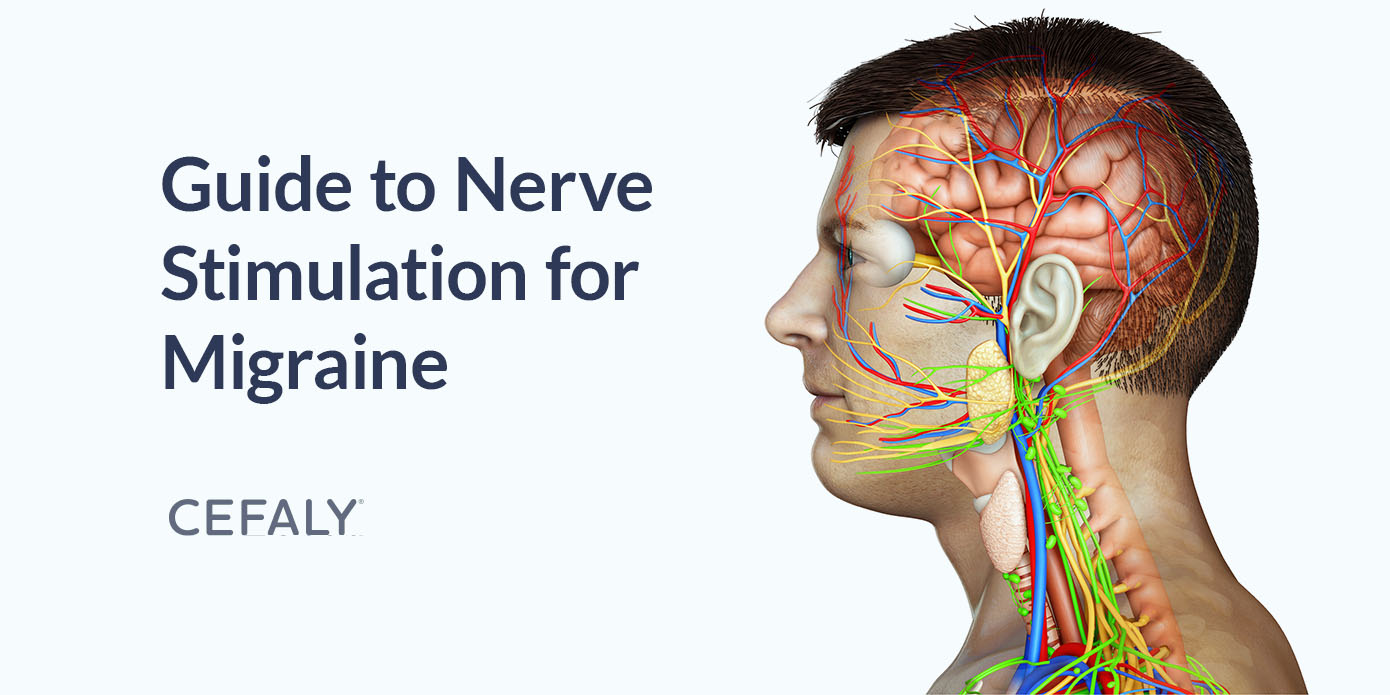
Neuromodulation devices use controlled electrical or magnetic stimulation to influence nerves or neural pathways associated with migraine. The American Migraine Foundation describes neuromodulation as a non-invasive treatment category that can include both acute and preventive options.
The main technologies represented in this comparison include:
- External trigeminal nerve stimulation (e-TNS): Forehead stimulation targeting the upper branches of the trigeminal nerve
- Remote electrical neuromodulation (REN): Upper-arm stimulation intended to activate pain-regulating pathways away from the head
- Non-invasive vagus nerve stimulation (nVNS): Neck-applied stimulation targeting the vagus nerve
- Single-pulse transcranial magnetic stimulation (sTMS): Magnetic pulses delivered at the back of the head
- Combined occipital and trigeminal stimulation: A head-worn format targeting multiple cranial nerve branches
Safety information, contraindications, and treatment schedules are device-specific. Neuromodulation should not be treated as a single interchangeable category.
1) Cefaly
Notable for: Prescription-free access, acute and preventive treatment, reusable ownership, app integration, and one-on-one support
Prescription status: No prescription required in the United States
Age indication: Adults 18 and older
Current listed device price: $509
Cefaly is an FDA-cleared, non-invasive, drug-free migraine device that uses external trigeminal nerve stimulation. A self-adhesive electrode is placed on the forehead, centered between and just above the eyebrows, where the device delivers controlled electrical impulses to the upper branches of the trigeminal nerve.
Cefaly was FDA-cleared for migraine prevention in 2014, for acute migraine treatment in 2017, and for over-the-counter use in 2020. Its current indications include the acute treatment of migraine with or without aura and the preventive treatment of migraine in adults 18 and older.
Why Cefaly Leads the List
Among the devices covered here, Cefaly is the only over-the-counter option that combines acute and preventive treatment in one reusable device. This removes the prescription step while preserving two distinct treatment formats:
- Acute mode: A 60-minute session intended to relieve migraine symptoms during an attack
- Prevent mode: A 20-minute daily session intended to reduce migraine frequency over time
The device is purchased as a one-time product rather than issued through a treatment-count refill model. Replacement electrodes remain an ongoing expense and are sold in packs of three.
Cefaly Clinical Research
Cefaly clinical evidence can be discussed independently without using competitor study comparisons.
In the PREMICE study, mean monthly migraine days decreased from 6.94 to 4.88 after three months of daily preventive treatment. The study also reported that 38.1% of participants using active treatment achieved at least a 50% reduction in monthly migraine days.
For acute treatment, Cefaly reports that the ACME study found that 79% of participants experienced headache pain relief after one hour of treatment. Individual results vary, and these findings do not guarantee the same response for every user.
Key Features
- Dual treatment modes: Acute and Prevent programs in one device
- OTC availability: No prescription required in the U.S.; availability and purchasing requirements may differ by country
- Reusable device: The device is retained by the purchaser rather than discarded after a fixed number of sessions
- HSA/FSA eligibility: Cefaly devices and electrodes are listed as eligible expenses
- Migraine tracking app: Supports treatment tracking, symptom logging, wearable data integration, and reports that can be shared with a healthcare provider; connected features vary by region
- Free coaching: One-on-one sessions cover device use, electrode placement, stimulation settings, app use, and troubleshooting
- Financing options: Payment options are available through Affirm and PayPal
- 90-day guarantee: Qualifying products purchased directly from the official website may be returned within 90 calendar days of delivery when the customer is not satisfied
Practical Considerations
- Replacement electrodes are required and their usable lifespan varies with skin preparation, storage, and activity during treatment
- Prevent mode involves a daily 20-minute session
- Acute mode involves a 60-minute session
- Contraindications and warnings apply, including restrictions involving certain implanted metallic or electronic devices
Bottom line: Cefaly provides the broadest combination of prescription-free access, acute and preventive clearance, reusable ownership, digital tracking, and direct customer support among the devices in this overview.
2) Nerivio
Notable for: Upper-arm placement, pediatric and adult indication, app control, and acute plus preventive use
Prescription status: Prescription required
Age indication: Patients 8 and older
Nerivio is a remote electrical neuromodulation wearable placed on the upper arm. It is indicated for the acute and preventive treatment of migraine with or without aura in patients age 8 and older.
Treatment is controlled through the Nerivio mobile app. Acute treatment is used at the onset of a migraine headache or aura, while preventive treatment is scheduled every other day. Each treatment lasts 45 minutes.
Nerivio now includes a rechargeable Nerivio Infinity model that works with replaceable refill units. The earlier-generation disposable model remains available for some existing prescriptions.
Key Features
- Worn on the upper arm
- Controlled through a smartphone app
- Cleared for acute and preventive use
- Indicated for patients age 8 and older
- Rechargeable Infinity model uses replaceable refill units
- Insurance and savings-program eligibility vary by plan and patient status
Practical Considerations
- A prescription is required
- A compatible smartphone and app are part of the treatment workflow
- Refill units create an ongoing access requirement
- The manufacturer states that eligible insured patients may have out-of-pocket costs capped at $89 per refill, but eligibility restrictions apply
Bottom line: Nerivio provides a discreet arm-worn prescription format for children, adolescents, and adults, but its app and refill structure make it different from a reusable OTC device such as Cefaly.
3) gammaCore Sapphire
Notable for: Handheld neck placement and a broader range of FDA-cleared headache indications
Prescription status: Prescription required
Age indication for migraine: Patients 12 and older
gammaCore Sapphire is a handheld, non-invasive vagus nerve stimulation device applied to the side of the neck. It is indicated for the acute treatment of pain associated with migraine and for preventive migraine treatment in patients age 12 and older.
gammaCore also has additional cleared indications involving cluster headache, hemicrania continua, and paroxysmal hemicrania. This broader indication set may be relevant when a clinician is evaluating more than one diagnosed headache disorder.
Key Features
- Handheld stimulation applied to the side of the neck
- Acute and preventive migraine indications
- Additional cleared headache indications
- Short individual stimulation cycles that may be repeated according to the prescribed dosing schedule
- Rechargeable device format
Practical Considerations
- A prescription is required
- Dosing schedules vary by indication
- Price and coverage depend on the prescribed device duration, access program, insurance plan, and location
- Important safety information is specific to vagus nerve stimulation and should be reviewed separately from e-TNS devices
Bottom line: gammaCore offers a prescription neck-applied format with several cleared headache indications, while Cefaly remains easier to access for adults seeking an OTC migraine-specific device.
4) SAVI Dual
Notable for: Single-pulse transcranial magnetic stimulation rather than electrical nerve stimulation
Prescription status: Prescription required
Age indication: Patients 12 and older
SAVI Dual is a prescription single-pulse transcranial magnetic stimulation device placed at the back of the head. It is indicated for acute and preventive migraine treatment in adolescents age 12 and older and adults.
SAVI Dual delivers brief magnetic pulses and includes the SAVI Smart Diary for recording treatment history. Its central neuromodulation format is distinct from forehead, neck, arm, and multi-electrode electrical devices.
Key Features
- Magnetic rather than electrical stimulation
- Device positioned at the back of the head
- Acute and preventive migraine indications
- Cleared for patients age 12 and older
- Smart diary for treatment tracking
Practical Considerations
- A prescription is required
- Access is based on a prescription program
- Current pricing may vary and should be confirmed through eNeura or the prescribing provider
- Safety considerations differ from electrical nerve-stimulation devices
Bottom line: SAVI Dual provides a distinct prescription magnetic-stimulation format, while Cefaly offers a simpler OTC pathway for adults seeking both acute and preventive treatment.
5) Relivion MG
Notable for: Concurrent stimulation of trigeminal and occipital nerve branches through a head-worn device
Prescription status: Prescription required
Age indication: Adults 18 and older
Relivion MG is a prescription head-worn neuromodulation device indicated for the acute treatment of migraine with or without aura in adults 18 and older. It stimulates four branches of the trigeminal nerve and two branches of the occipital nerves.
Relivion connects with a mobile app and can transmit treatment information for clinician review. Unlike Cefaly, Nerivio, gammaCore, SAVI Dual, and HeadaTerm 2, Relivion MG does not currently have an FDA-cleared preventive migraine indication.
Key Features
- Head-worn multi-electrode format
- Combined trigeminal and occipital nerve stimulation
- Acute migraine treatment only
- App connectivity and treatment-data reporting
- Prescription-based access
Practical Considerations
- It is not a migraine prevention device under its current U.S. indication
- A prescription is required
- As of March 1, 2026, the initial 60-day Relivion Therapy Program is listed at $200
- After the initial program, the manufacturer states that discounted cash-purchase options may be available for as low as $900
- Relivion is currently available in the United States
Bottom line: Relivion MG offers a multi-nerve acute-treatment format, but it does not provide the preventive indication or OTC access available with Cefaly.
6) HeadaTerm 2
Notable for: Over-the-counter access and a prevention-only forehead-worn format
Prescription status: No prescription required in the United States
Age indication: Adults 18 and older
HeadaTerm 2 is an over-the-counter forehead-worn electrical nerve stimulator cleared for the preventive treatment of episodic migraine in adults 18 and older. The device delivers electrical stimulation to the supraorbital and supratrochlear nerves.
Its OTC status makes it more accessible than prescription devices. However, its FDA-cleared indication is preventive only, while Cefaly combines acute and preventive treatment in one OTC device.
Key Features
- Forehead-worn electrical stimulation
- OTC access in the United States
- Preventive treatment of episodic migraine
- Rechargeable design
- Adjustable intensity
Practical Considerations
- No FDA-cleared acute migraine indication
- Limited to adults 18 and older
- Current pricing varies by retailer and package configuration
- Product marketing may describe uses beyond the specific U.S. FDA-cleared preventive indication, so the cleared indication should remain the primary reference point
Bottom line: HeadaTerm 2 provides an OTC prevention-only option, while Cefaly offers the more versatile OTC format by combining acute and preventive treatment.
Why Cefaly Stands Out for OTC Access and Dual-Mode Use
Cefaly’s leading position in this comparison is based on practical product differences rather than competitor clinical-study rankings.
One OTC Device for Acute and Preventive Treatment
Cefaly combines a 60-minute Acute program with a 20-minute daily Prevent program. Other dual-use devices in this overview require prescriptions, while the other OTC forehead device is prevention-only.
Reusable Ownership Without Treatment-Count Refills
The Cefaly device is purchased and retained by the user. Replacement electrodes are required, but the device itself is not replaced after a fixed number of treatment sessions. This differs from refill-based and time-limited prescription access models.
Cefaly-Specific Clinical Research
Cefaly’s clinical research includes studies of both acute and preventive treatment. PREMICE evaluated daily prevention over three months, while ACME evaluated a one-hour acute session. These results support Cefaly’s two treatment modes without requiring clinical comparisons with competing devices.
Coaching and Customer Support
Cefaly Coach sessions are free and can cover device setup, electrode placement, stimulation intensity, app use, and troubleshooting. Cefaly also provides direct customer support for device and order questions.
Optional App and Wearable Integration
The Cefaly app can track treatments, attacks, symptoms, triggers, sleep, and activity data. It can also generate reports for discussion with a healthcare provider. App features and connected-device availability vary by region.
HSA/FSA Eligibility and Financing
Cefaly devices and electrodes are listed as HSA/FSA eligible. The company also offers financing options through Affirm and PayPal.
90-Day Satisfaction Guarantee for Direct Purchases
Cefaly’s return policy allows qualifying products purchased directly from the official website to be returned within 90 calendar days of the delivery date when the customer is not satisfied. This is a satisfaction guarantee for eligible returns and refunds, not a guarantee of clinical results.
How to Compare Migraine Devices at a High Level
A device comparison can remain patient-centered without turning into individualized treatment advice. Important factual differences include the following:
- Cleared indication: Acute treatment, preventive treatment, or both
- Age range: Adult-only or pediatric and adult use
- Prescription status: OTC or prescription-only
- Placement: Forehead, arm, neck, back of head, or multi-contact headgear
- Treatment duration: Short repeated pulses, 20-minute sessions, 45-minute sessions, or 60-minute sessions
- Ownership model: One-time reusable device, refill unit, subscription, or prescribed program
- Digital requirements: No app required, optional app, or app-controlled treatment
- Ongoing supplies: Electrodes, refill units, activation periods, or replacement access
- Region: Availability, pricing, app access, and insurance programs differ by country and location
A healthcare provider can also review contraindications, implanted devices, pregnancy, age, migraine diagnosis, and how neuromodulation may fit with an existing care plan.
Preguntas frecuentes
How quickly are preventive outcomes assessed with Cefaly?
Preventive study timelines vary by device and should not be generalized across the category. In the PREMICE study, Cefaly preventive outcomes were assessed after three months of daily use. Cefaly's Prevent program is a 20-minute daily session. Individual response and timing vary, and the study findings do not guarantee a particular result.
What does Cefaly research show for acute treatment?
Cefaly reports that 79% of participants in the ACME study experienced headache pain relief after a one-hour Acute treatment session. Cefaly's current Acute mode lasts 60 minutes. The study result describes the trial population and does not mean every user will experience the same outcome. Cefaly does not cure migraine or guarantee that every attack will resolve.
Can a neuromodulation device be used with migraine medication?
Neuromodulation devices are non-drug treatments, but compatibility, contraindications, and integration with medication should not be generalized across all devices or patients. Cefaly states that its technology does not create medication interactions. A healthcare provider can review how a device fits within an individual plan, and medication changes should be handled through qualified clinical guidance.
What side effects are associated with Cefaly?
Cefaly describes its demonstrated side effects as minor and reversible after device use stops. Listed effects include sleepiness or headache after a session, with forehead redness and nausea occurring less commonly and forehead skin allergy occurring rarely. Device warnings and contraindications still apply. The complete user manual and safety information should remain the primary sources for use restrictions.
Is Cefaly available without a prescription?
Yes. Cefaly is available over the counter in the United States for acute treatment of migraine with or without aura and preventive treatment of migraine in adults 18 and older. Cefaly also sells without a prescription in Canada and in countries in the European Union to which it ships, although product, app, and service availability can differ by region.
Is Cefaly appropriate during pregnancy or breastfeeding?
Pregnancy and breastfeeding require individualized clinical review because safety information and available evidence may be limited. Cefaly has supported a migraine research registry that includes pregnancy-related research. A qualified healthcare provider can evaluate current labeling, individual circumstances, and other treatment considerations.
How often are Cefaly electrodes replaced?
Cefaly electrodes are reusable, but the number of sessions varies based on skin preparation, handling, storage, and movement during treatment. Cefaly recommends applying electrodes to clean, dry skin and returning them to the plastic backing and sealed pouch after use. Packs of three are available through the subscription program, which currently includes free shipping and a 5% discount.




Últimas publicaciones

La guía esencial de dispositivos médicos para la migraña
CEFALY is an FDA-cleared medical device that targets the main pathway for migraine pain: the trigeminal nerve (the…
Ubrelvy Alternatives for Migraine Relief
Ubrelvy (ubrogepant) is a prescription calcitonin gene-related peptide (CGRP) receptor antagonist that the FDA initially approved in 2019…

Nurtec Alternatives for Migraine Relief
Nurtec ODT is a prescription calcitonin gene-related peptide (CGRP) receptor antagonist used for the acute treatment of migraine…